FeaturedSmarty Ears Online: 80 activities in your browser, with progress reports for every student. Try it free for 30 days. Learn more →
The premier rehabilitation toolkit designed exclusively for adults recovering from aphasia and acquired reading disorders.
Recovery is a step-by-step process. The Reading Rehabilitation Toolkit features six distinct, tiered activities designed to scale alongside your patient's cognitive progress.
Whether a patient is just beginning to associate single words with images, or they are ready to reconstruct complete sentences and answer contextual questions, the app provides a structured, evidence-based pathway for every stage of rehabilitation.
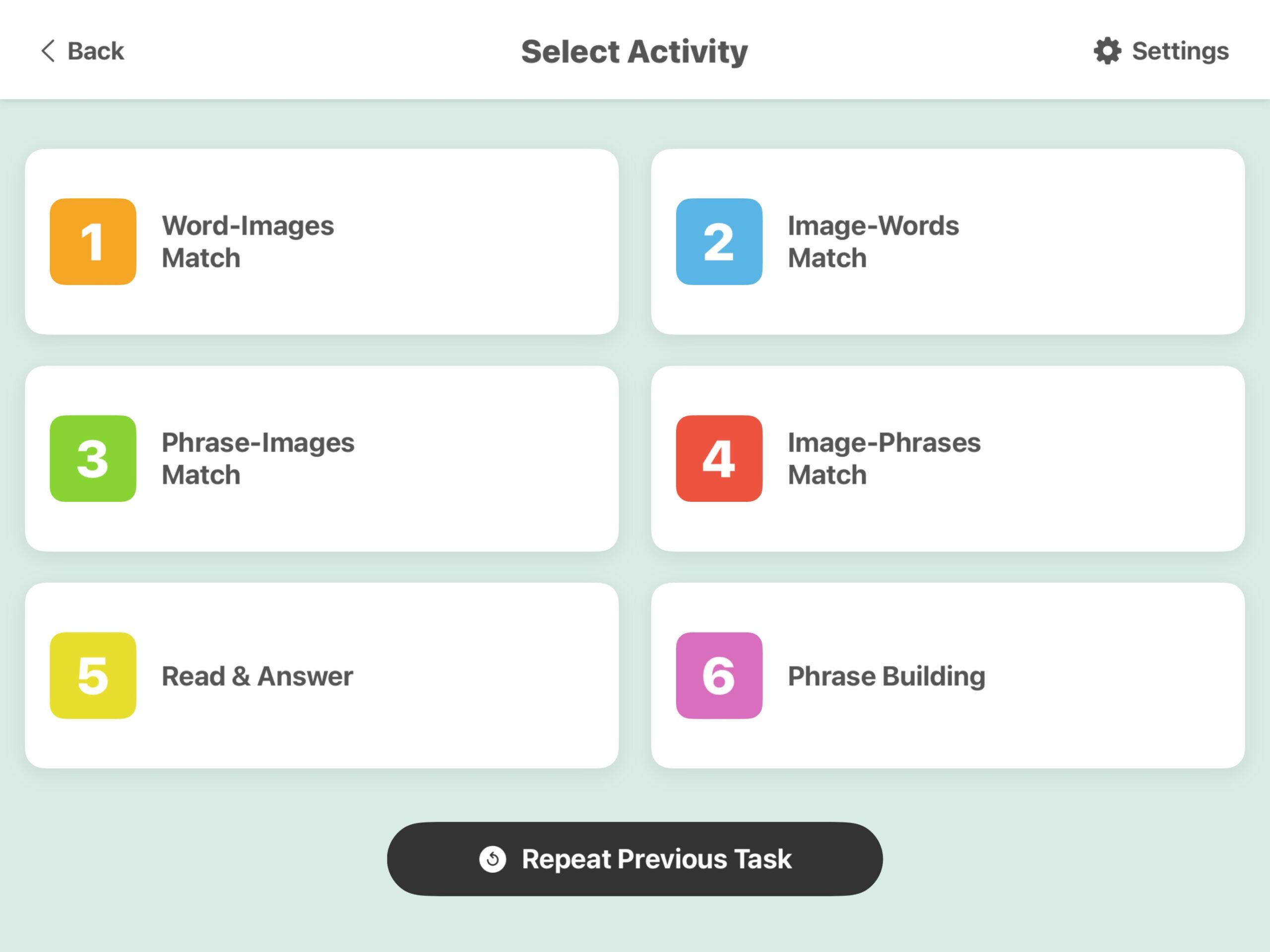
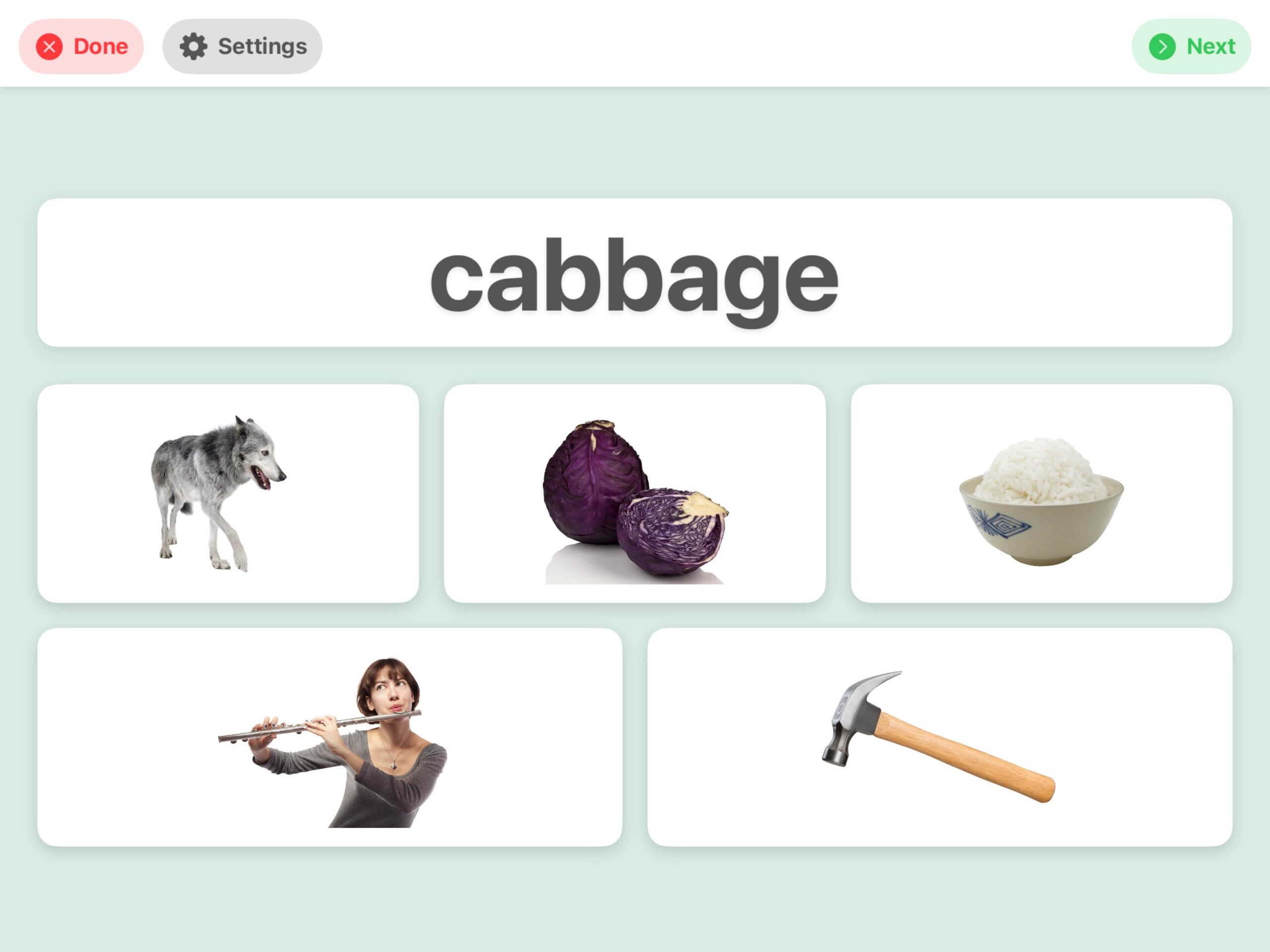
The first stage of the toolkit focuses on foundational vocabulary recovery. Patients are presented with a single, clear target word (such as "Orange" or "Eyebrow") and must identify the corresponding real-life photograph from a field of visual distractors.
Therapists can adjust the field size (e.g., choosing between 2, 3, or more images) to directly scale the cognitive load based on the patient's current tolerance and visual scanning abilities.
In cognitive neuropsychological models of reading, successfully mapping the orthographic lexicon (the written word) directly to the semantic system (meaning) is the essential first step in treating acquired alexia. By establishing high-accuracy single-word comprehension, clinicians lay the critical groundwork necessary before advancing to phrase-level syntax and complex sentence processing.
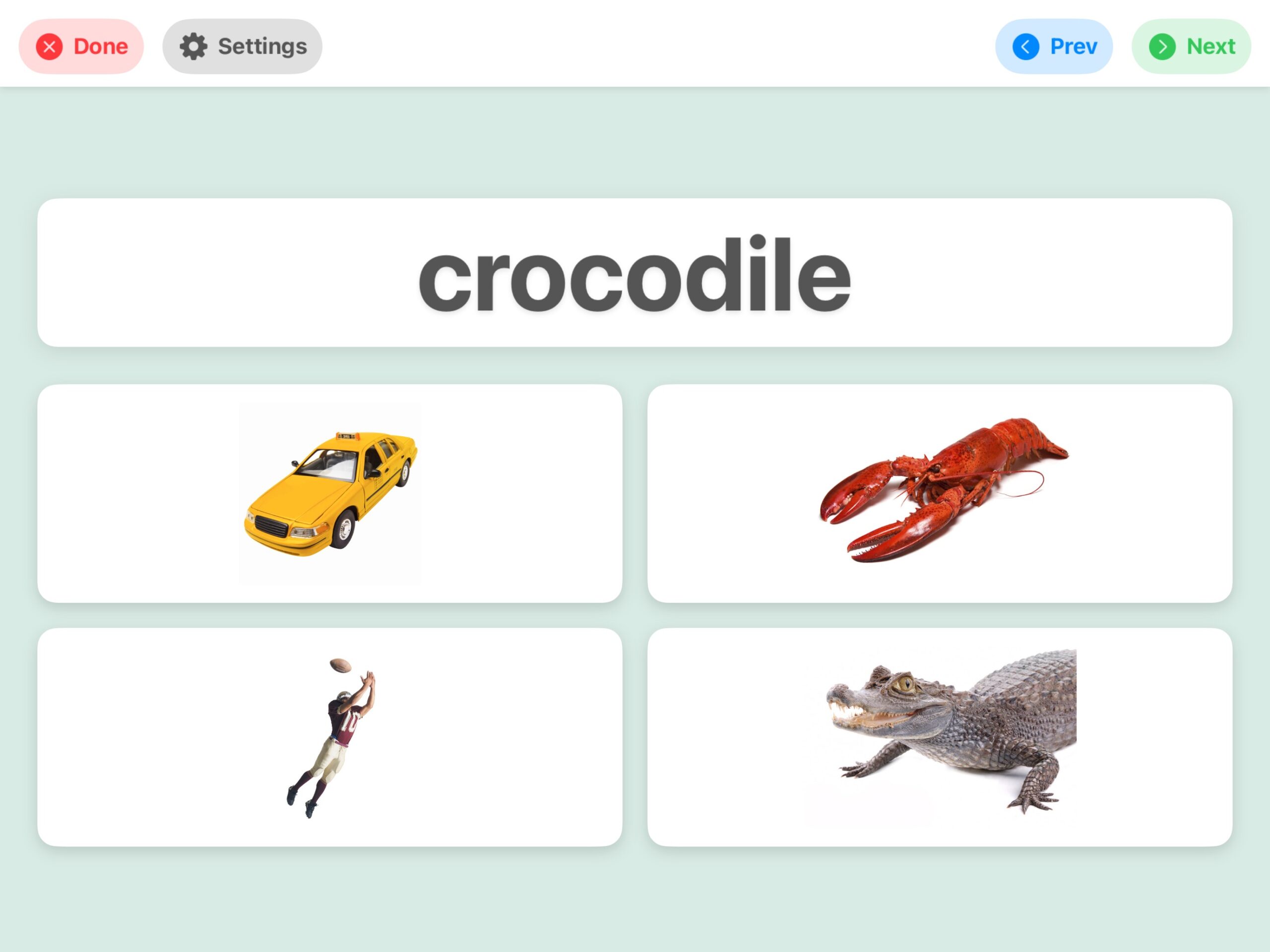
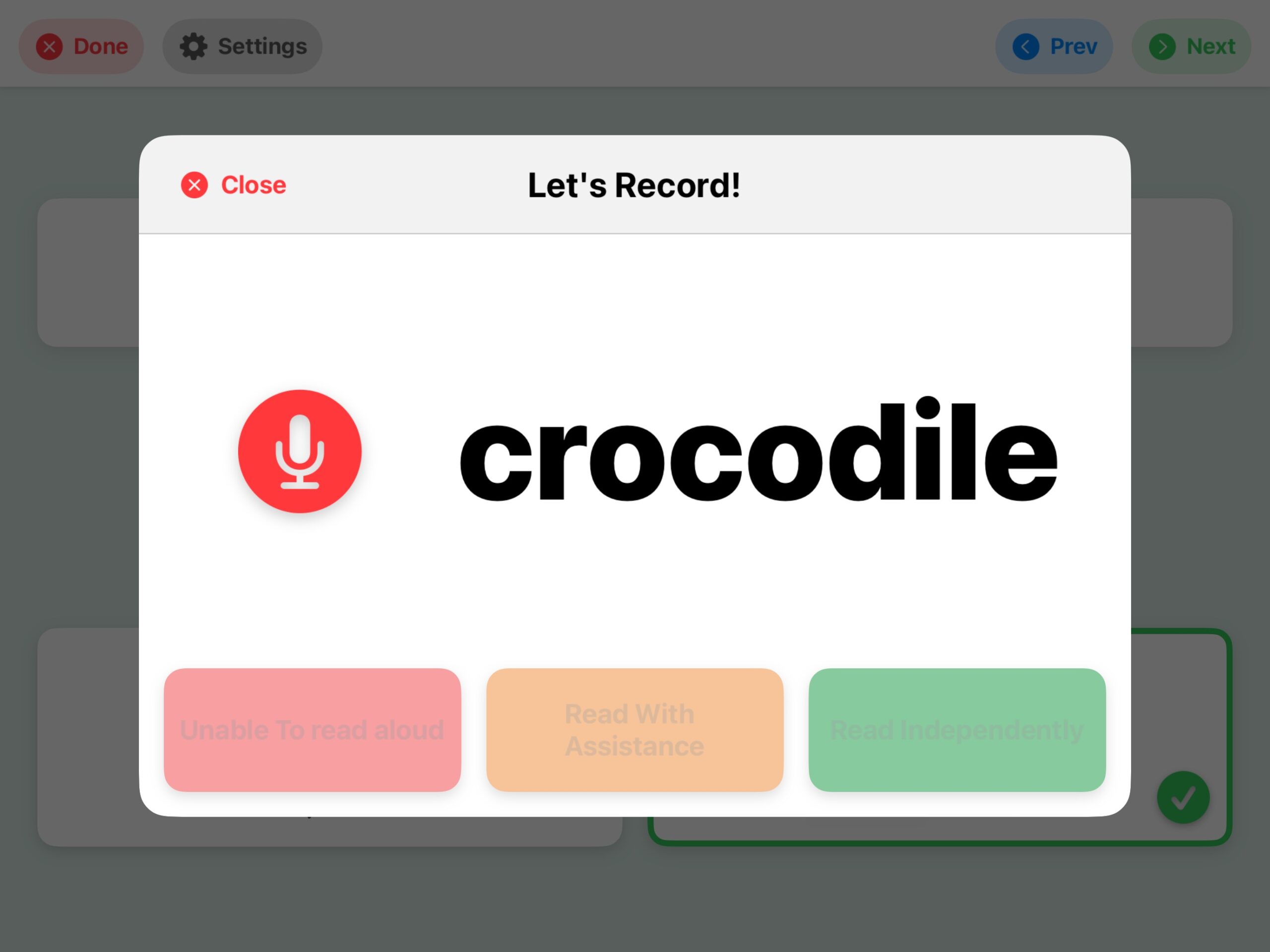
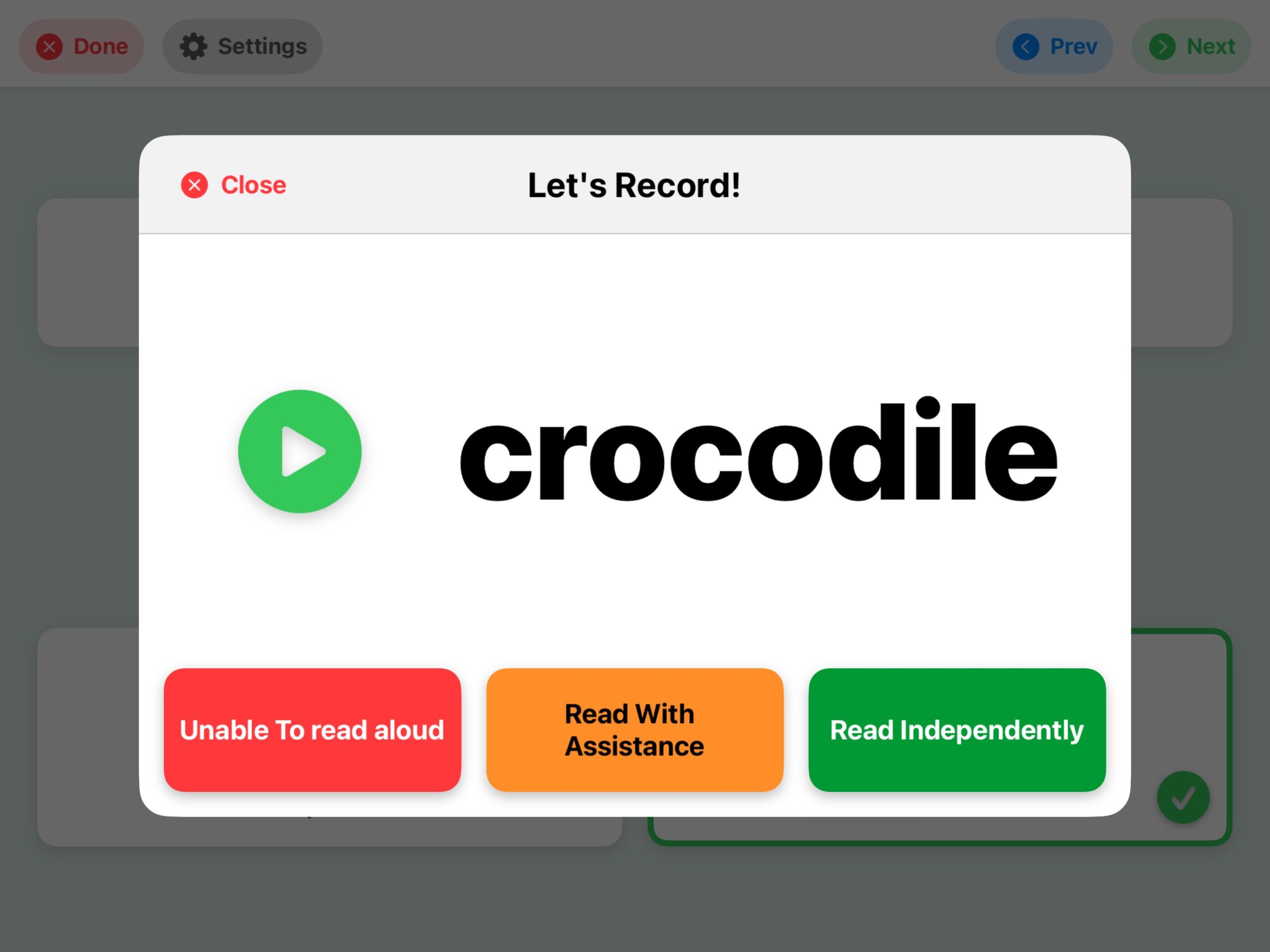
Bridging the gap between receptive reading (recognizing the word) and expressive language (articulating it) is a critical component of aphasia rehabilitation. The built-in "Let's Record!" feature encourages patients to read the target word aloud.
After recording, patients can immediately listen to their own playback. Clinicians can then evaluate the trial using a specialized three-tier clinical grading system: Unable to read aloud, Read With Assistance, or Read Independently.
Auditory self-monitoring is a vital strategy for individuals with expressive aphasia or apraxia of speech. By hearing their own recorded voice, patients build self-awareness and can identify phonological errors. Furthermore, the tiered scoring system allows SLPs to track exactly how much cueing was required for the patient to achieve expressive success over time.
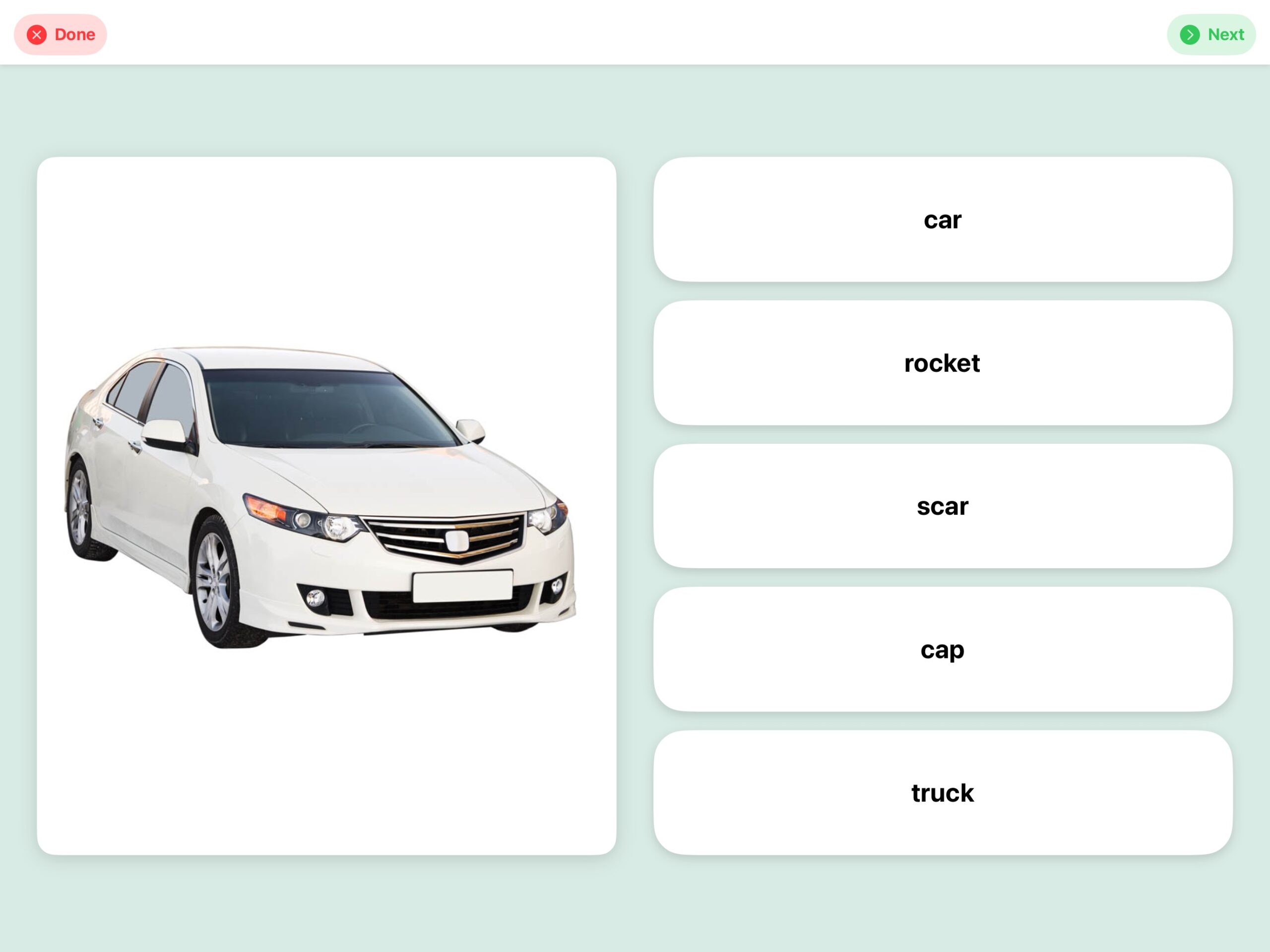
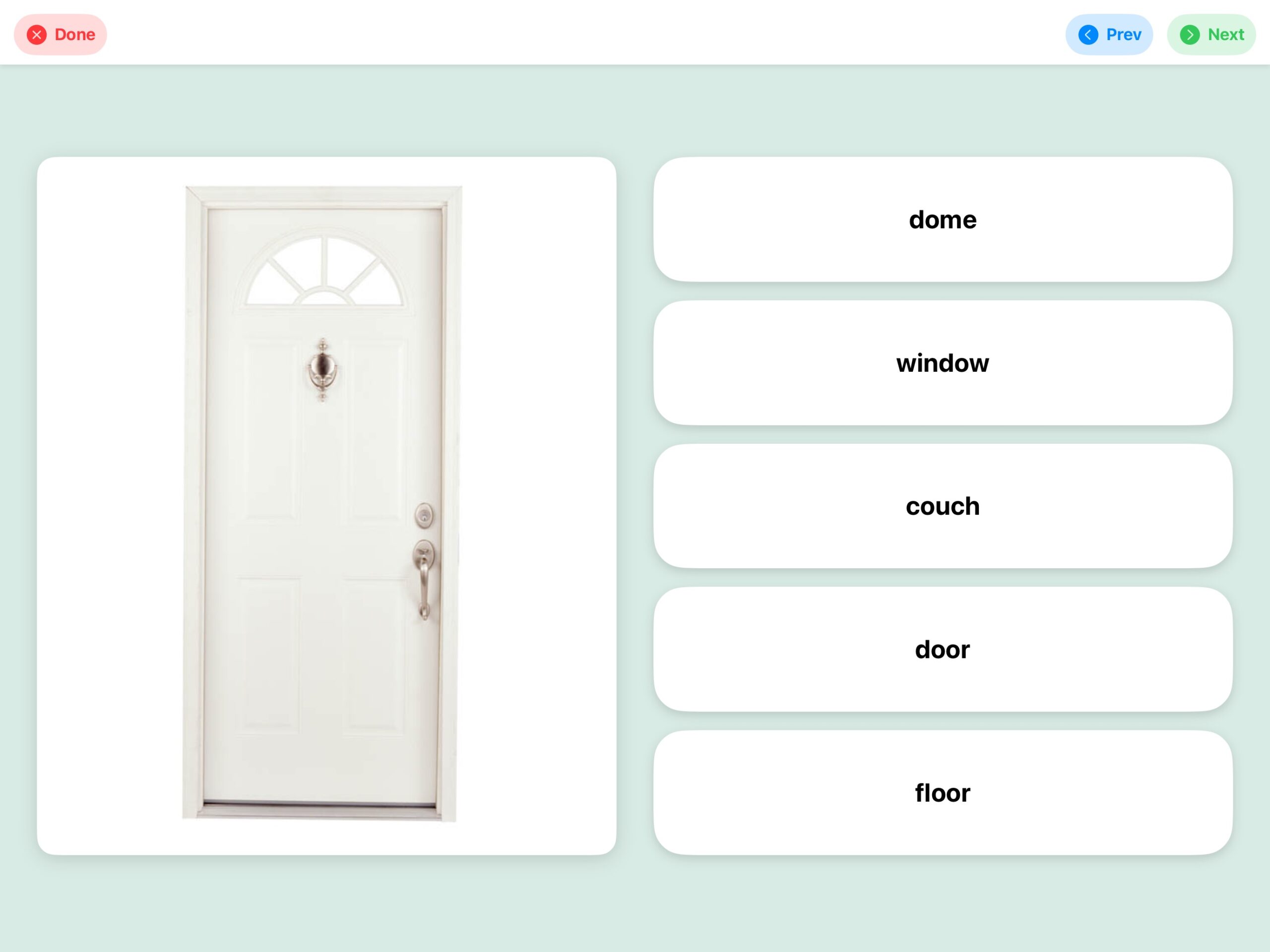
In the second module, the cognitive process is reversed. Patients are presented with a single, clear photograph—such as a white car or a front door—and must select the correct written word from a field of text-based options.
To effectively challenge and rebuild reading comprehension, the app populates the answer field with carefully selected semantic and orthographic distractors. For example, when attempting to identify the car, a patient must differentiate the correct answer from visually or categorically related words like "rocket", "scar", "cap", and "truck".
Similarly, when identifying a jacket, the patient must scan and eliminate distractors such as "jazz", "sweater", "mittens", and "racket". This rigorous distractor methodology ensures the patient is genuinely decoding the text rather than simply guessing.
Once single-word comprehension is established, the therapy progresses to multi-word phrases. In Activity 3, patients are tasked with reading a descriptive phrase and mapping it to the correct visual representation, increasing the demands on working memory and linguistic processing.
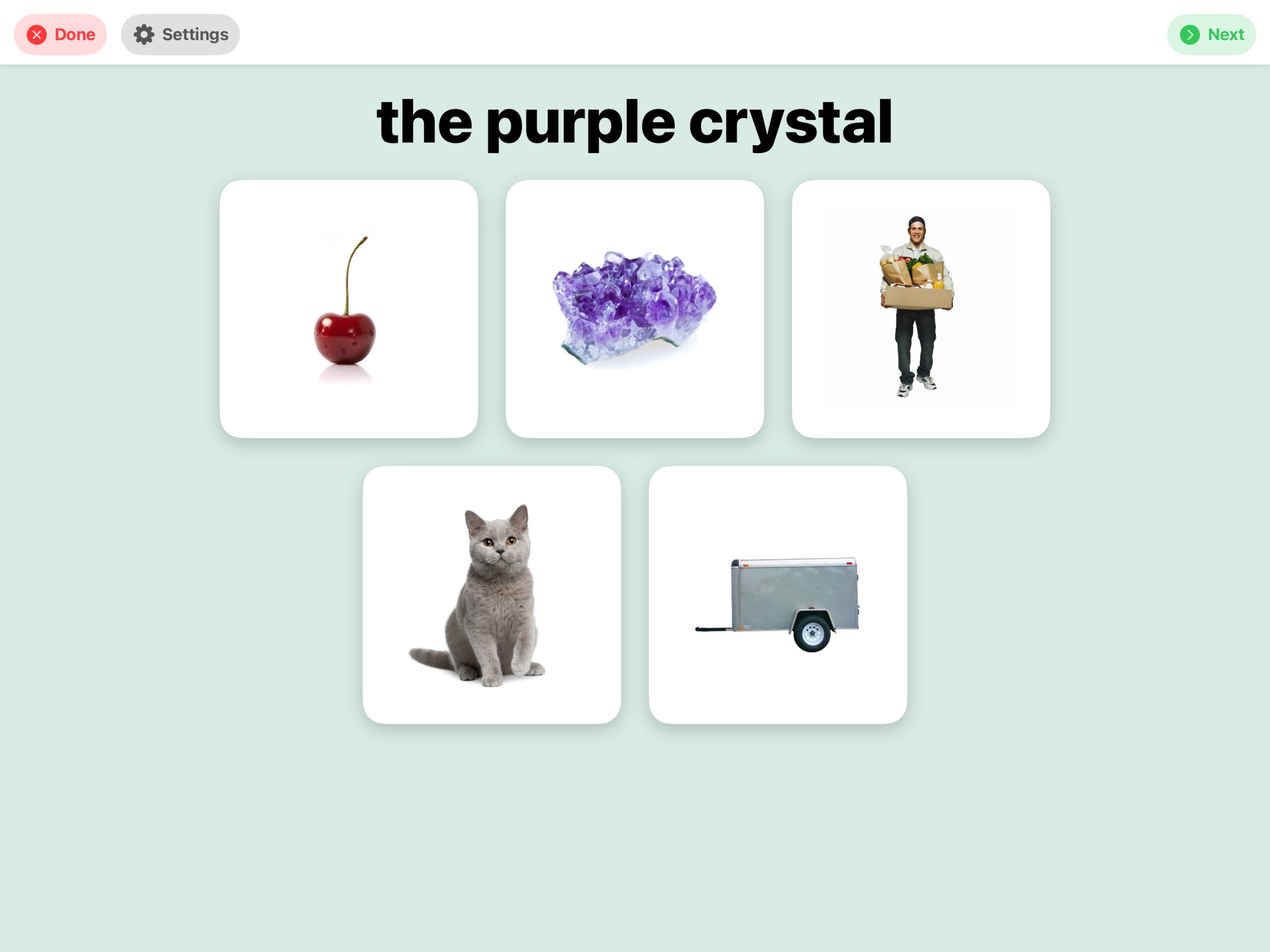
For example, a patient must read "the purple crystal" and accurately identify it from a field of distractors that includes a cherry, a cat, a trailer, and a man holding groceries.
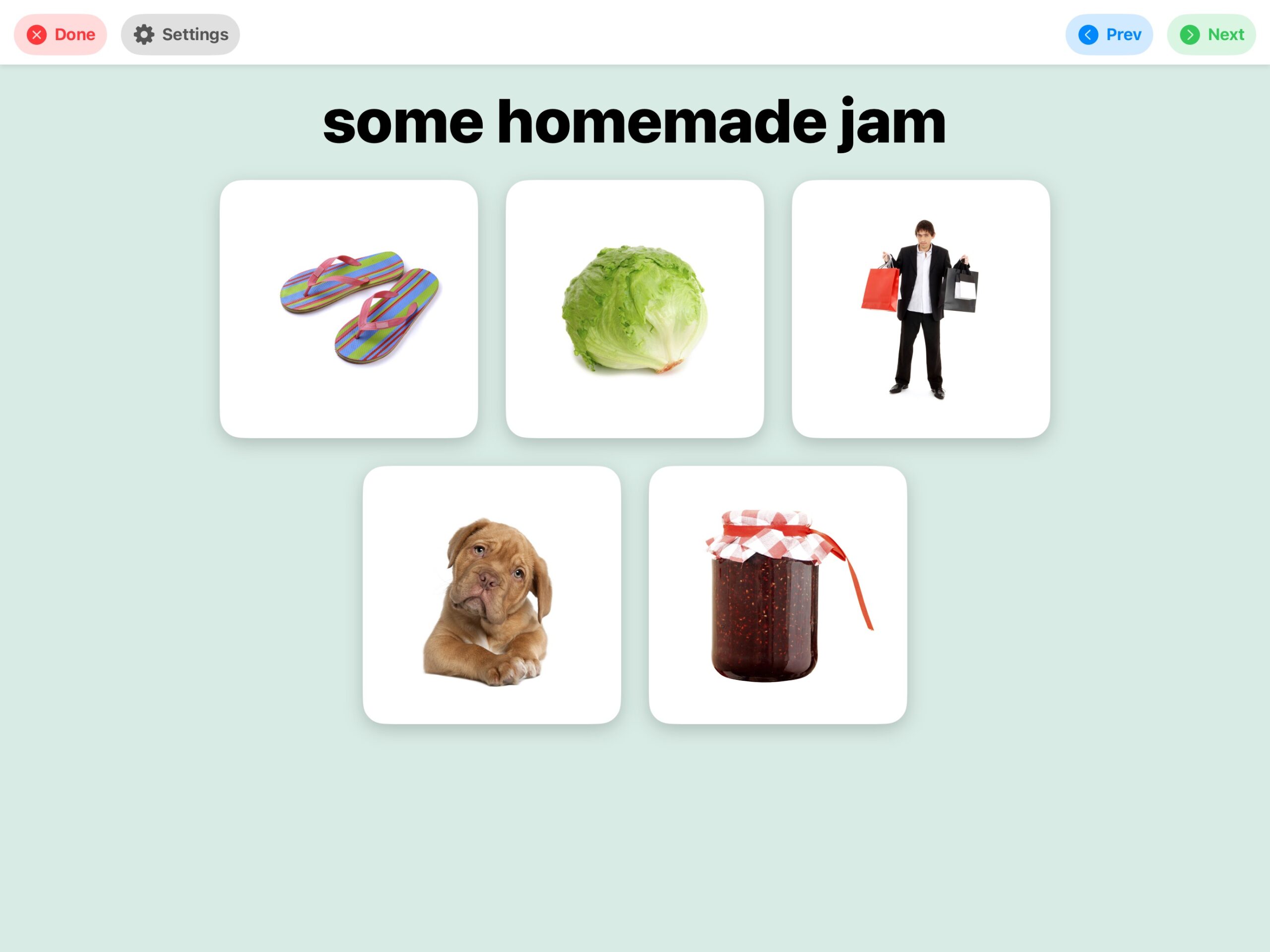
In another exercise, the patient reads "some homemade jam" and must select the jar of jam while ignoring unrelated images such as sandals, lettuce, a dog, or a shopper. This forces the brain to process adjectives and nouns together, re-establishing syntactical comprehension.
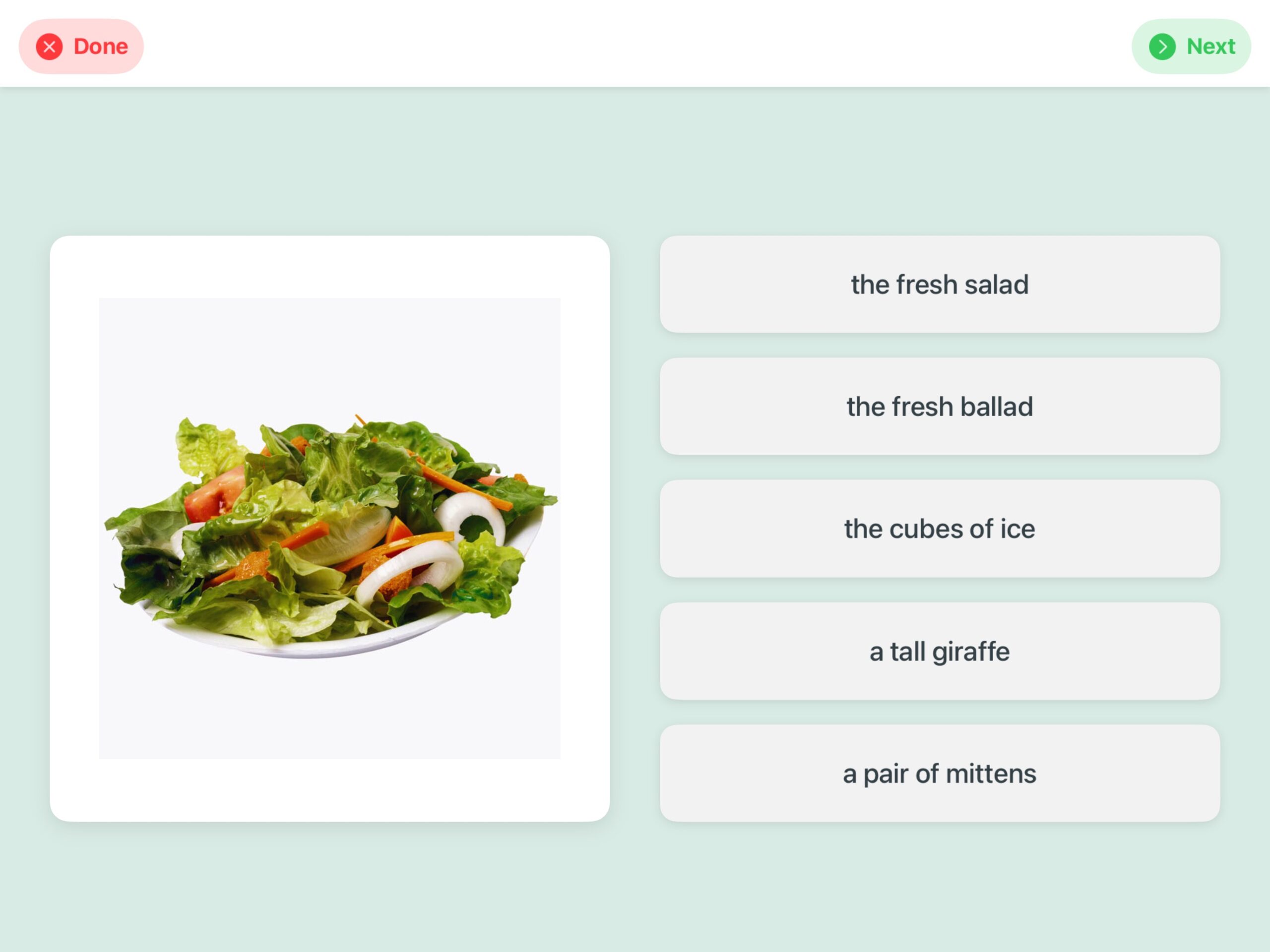
Building upon the foundational decoding skills established in previous modules, Activity 4 presents a single image alongside a field of descriptive text phrases. The patient must analyze the visual information and read through multiple multi-word options to find the exact match.
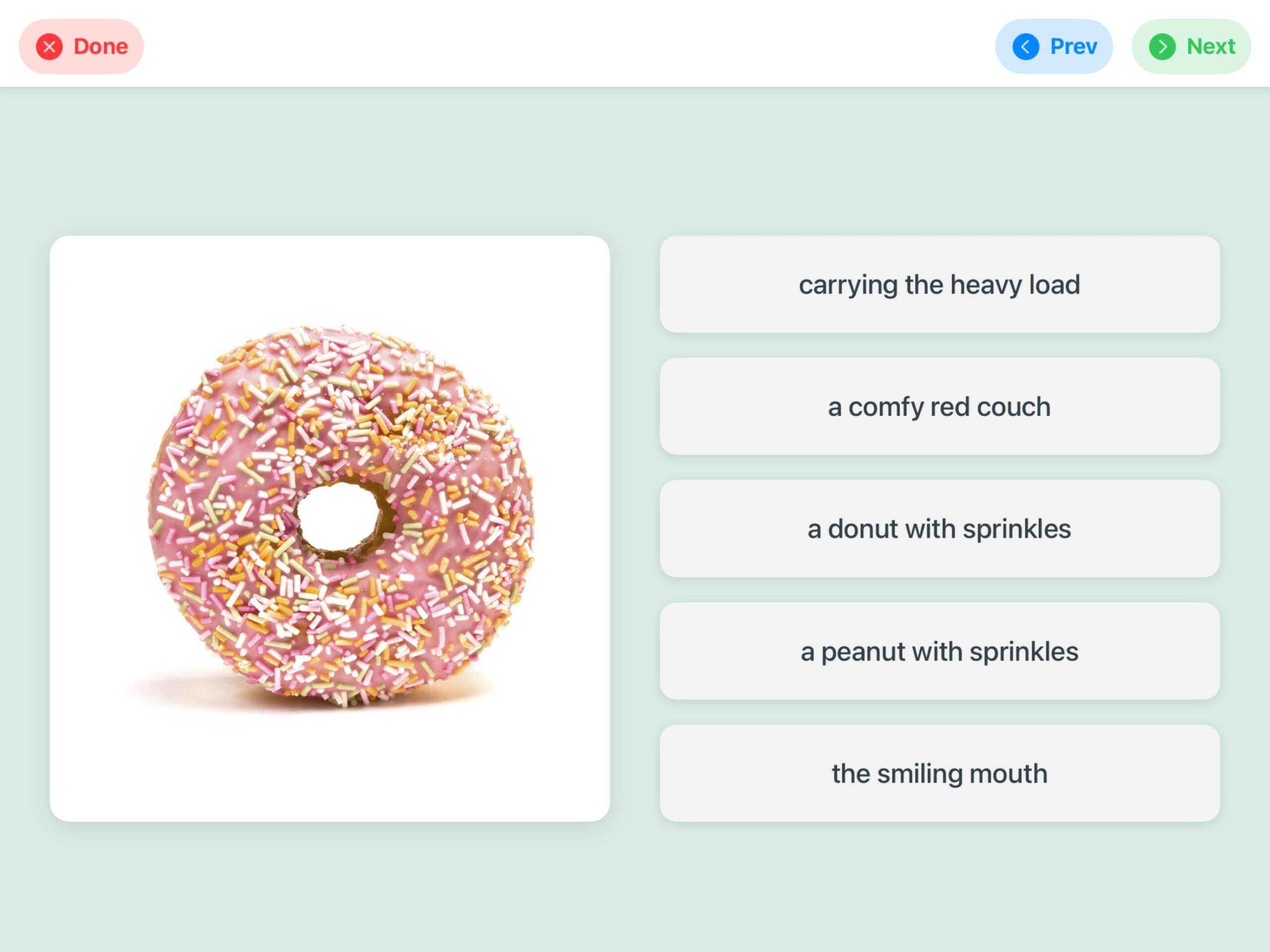
This module employs sophisticated phonological and semantic distractors to prevent simple guessing. For example, when shown an image of a salad, the patient must differentiate "the fresh salad" from cleverly disguised options like "the fresh ballad" or "the cubes of ice."
Similarly, when presented with a donut, patients are challenged to carefully read and distinguish "a donut with sprinkles" from "a peanut with sprinkles." This deliberate inclusion of visually and phonetically similar words forces true reading comprehension and syntax processing at the phrase level.
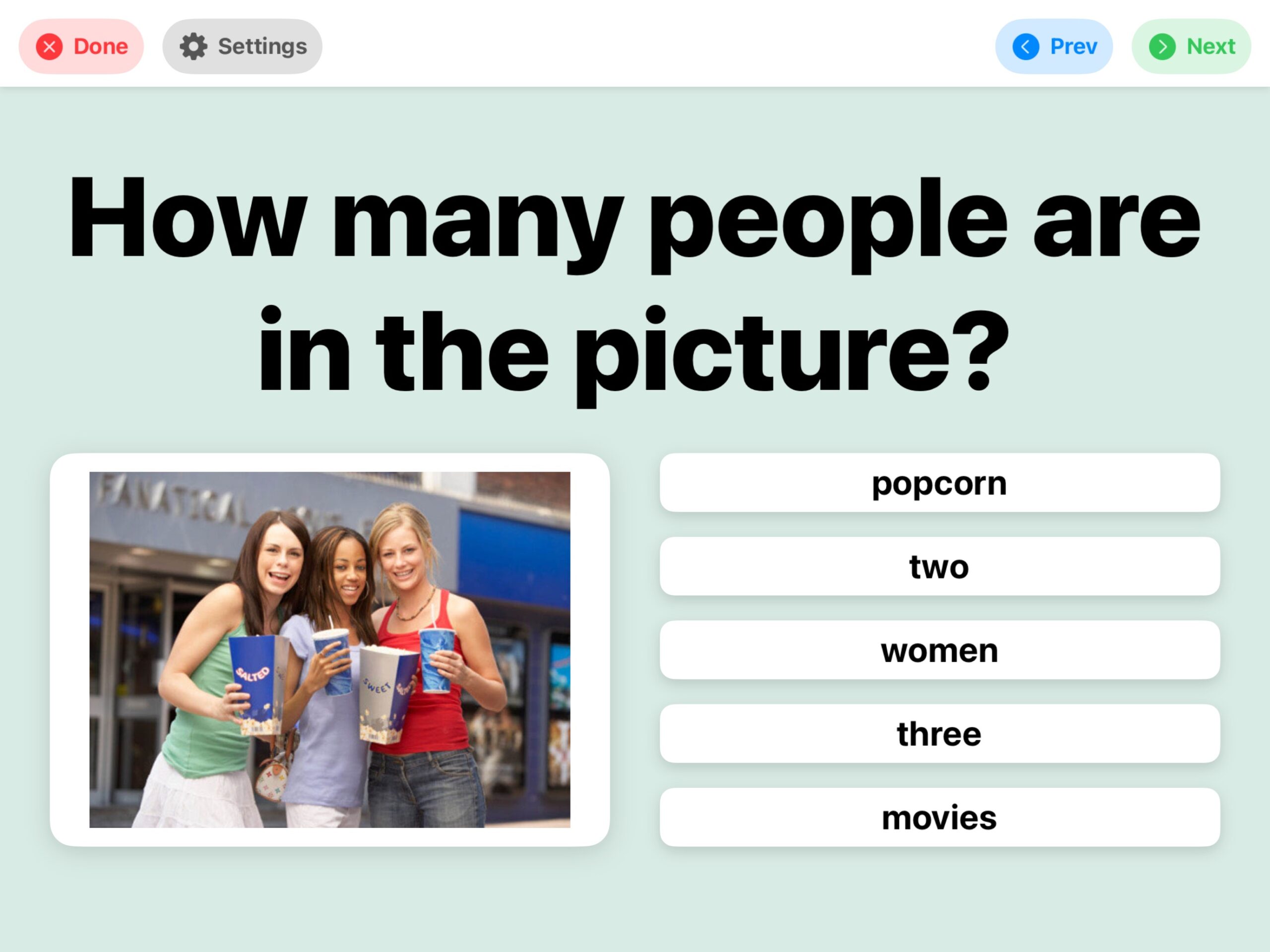
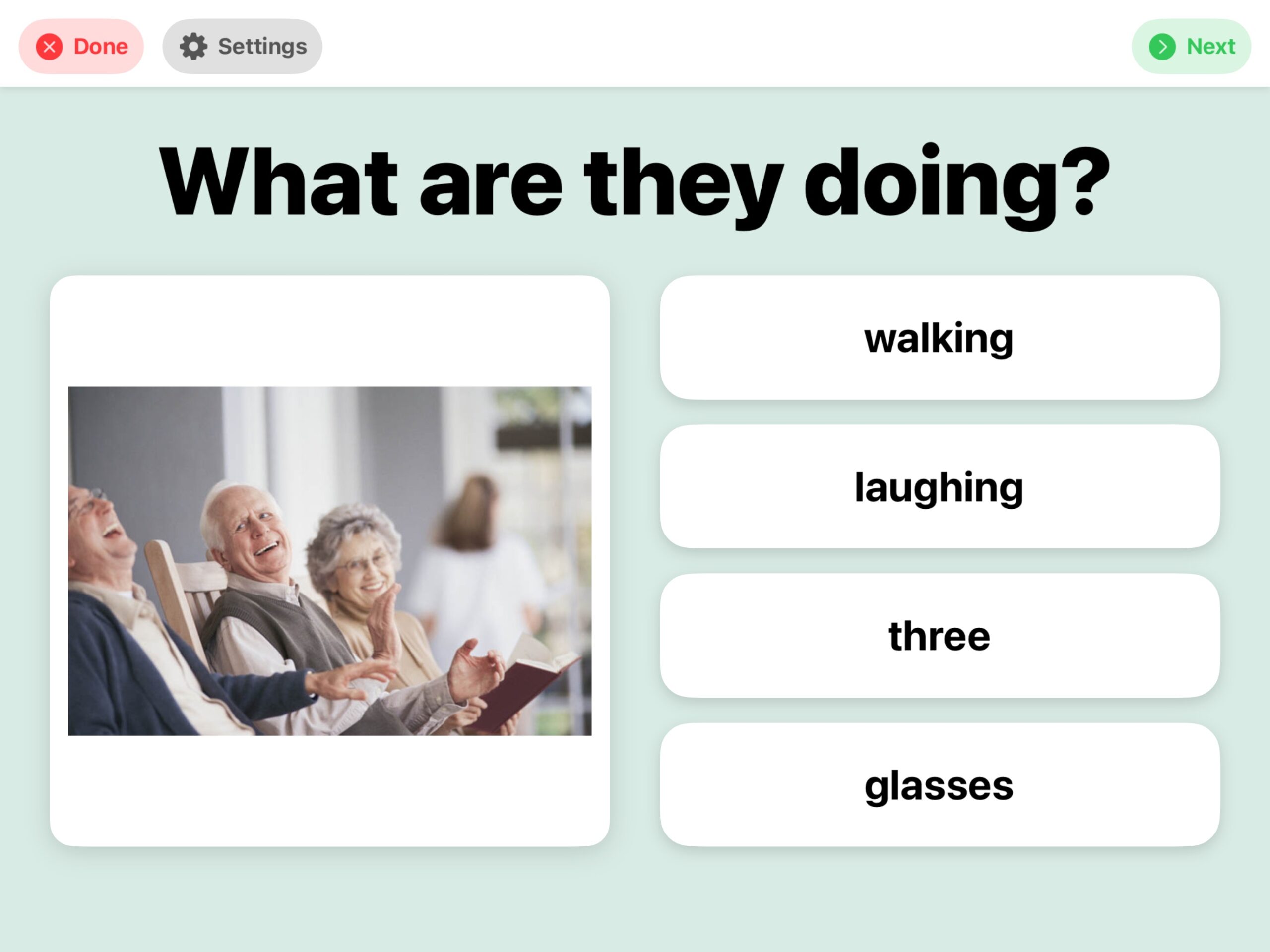
Moving from basic decoding to active comprehension, the "Read & Answer" module challenges patients to process complete interrogative sentences and deduce the correct answer based on a contextual visual scene.
Patients are presented with complex real-world photographs and targeted questions such as "How many people are in the picture?" or "What are they doing?". To succeed, the patient must simultaneously comprehend the written question, scan the image for context clues, and evaluate a field of text options.
The distractors in this module are heavily context-driven. If the question asks for a number of people, the options will include related environmental vocabulary (e.g., "popcorn", "women", "movies") forcing the patient to read the options critically rather than relying on visual association alone.
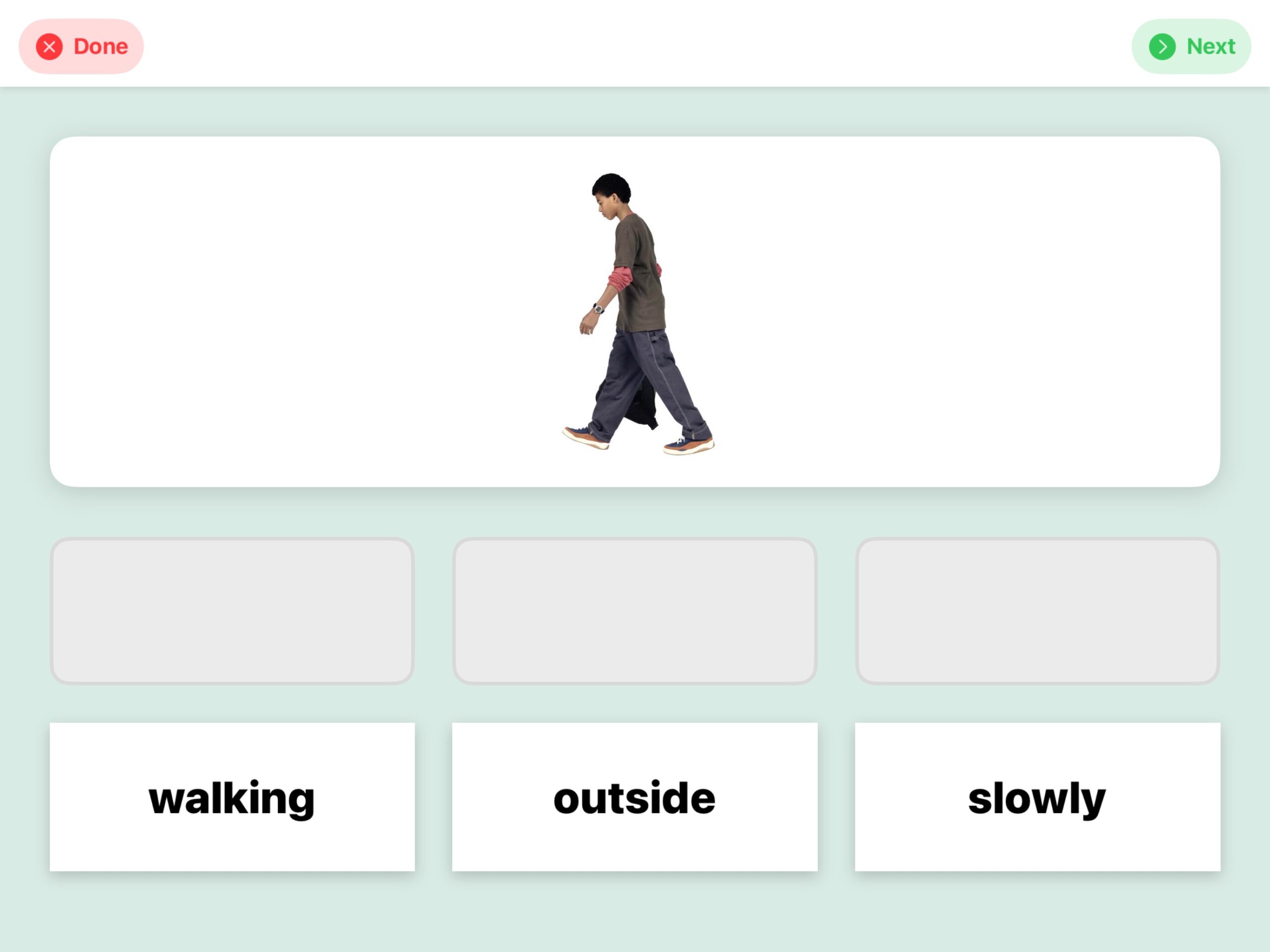
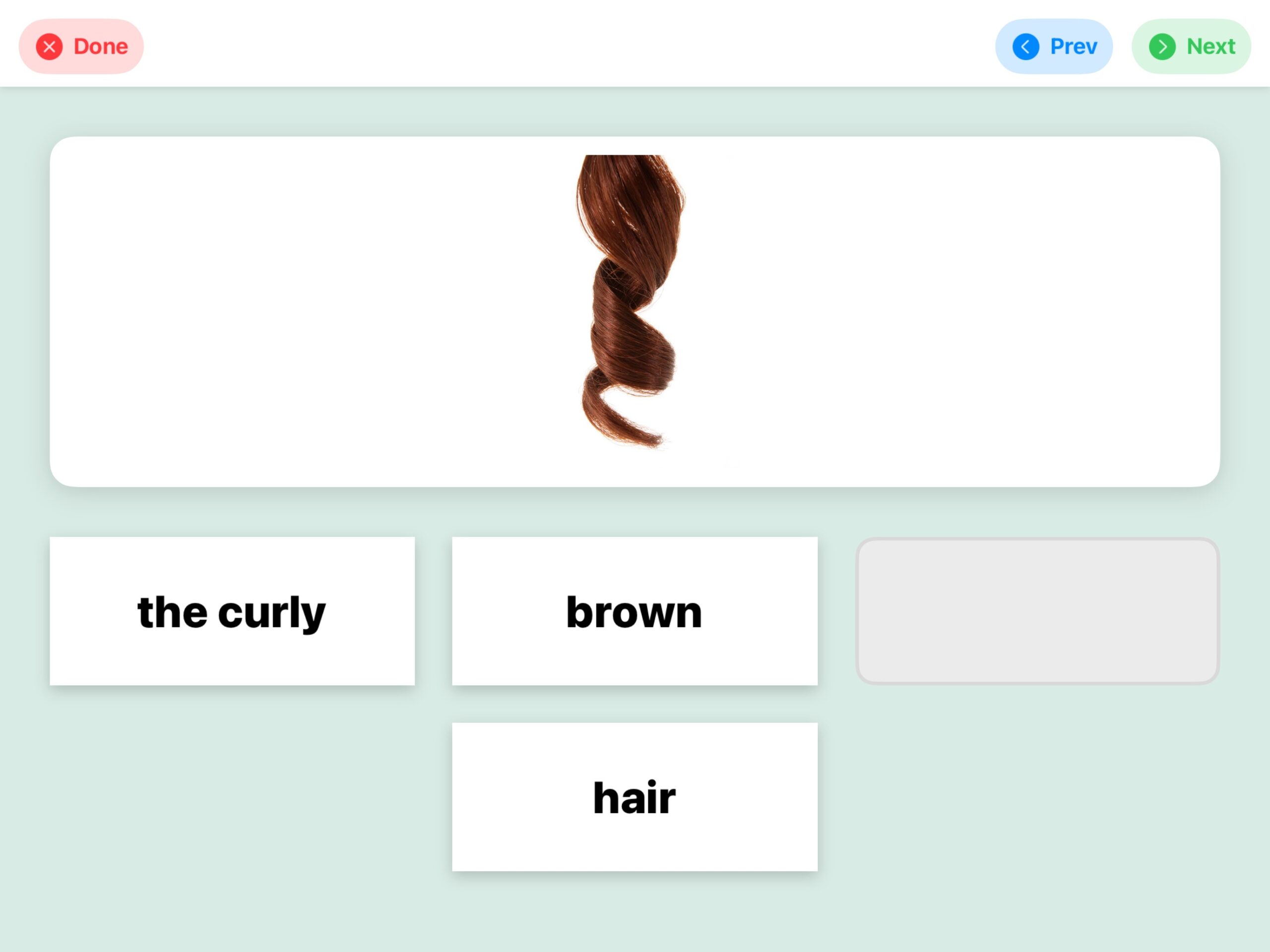
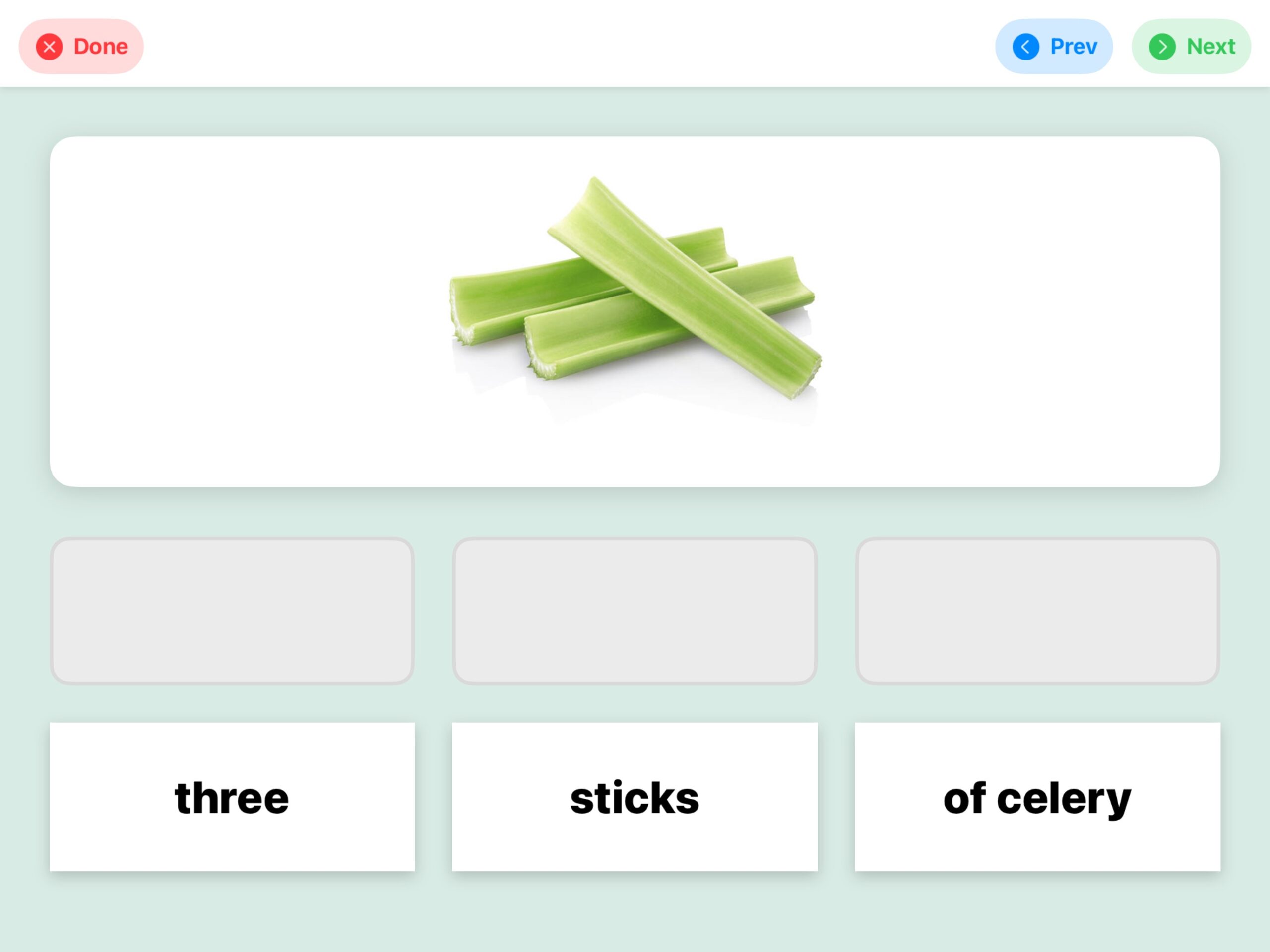
The final module represents the highest level of cognitive challenge in the toolkit. Instead of simply matching pre-built options, patients must actively reconstruct syntax by arranging scrambled word tiles into the correct grammatical order to describe the image.
This hands-on, drag-and-drop exercise forces the brain to practice sentence formulation, working memory, and sequential grammatical planning.
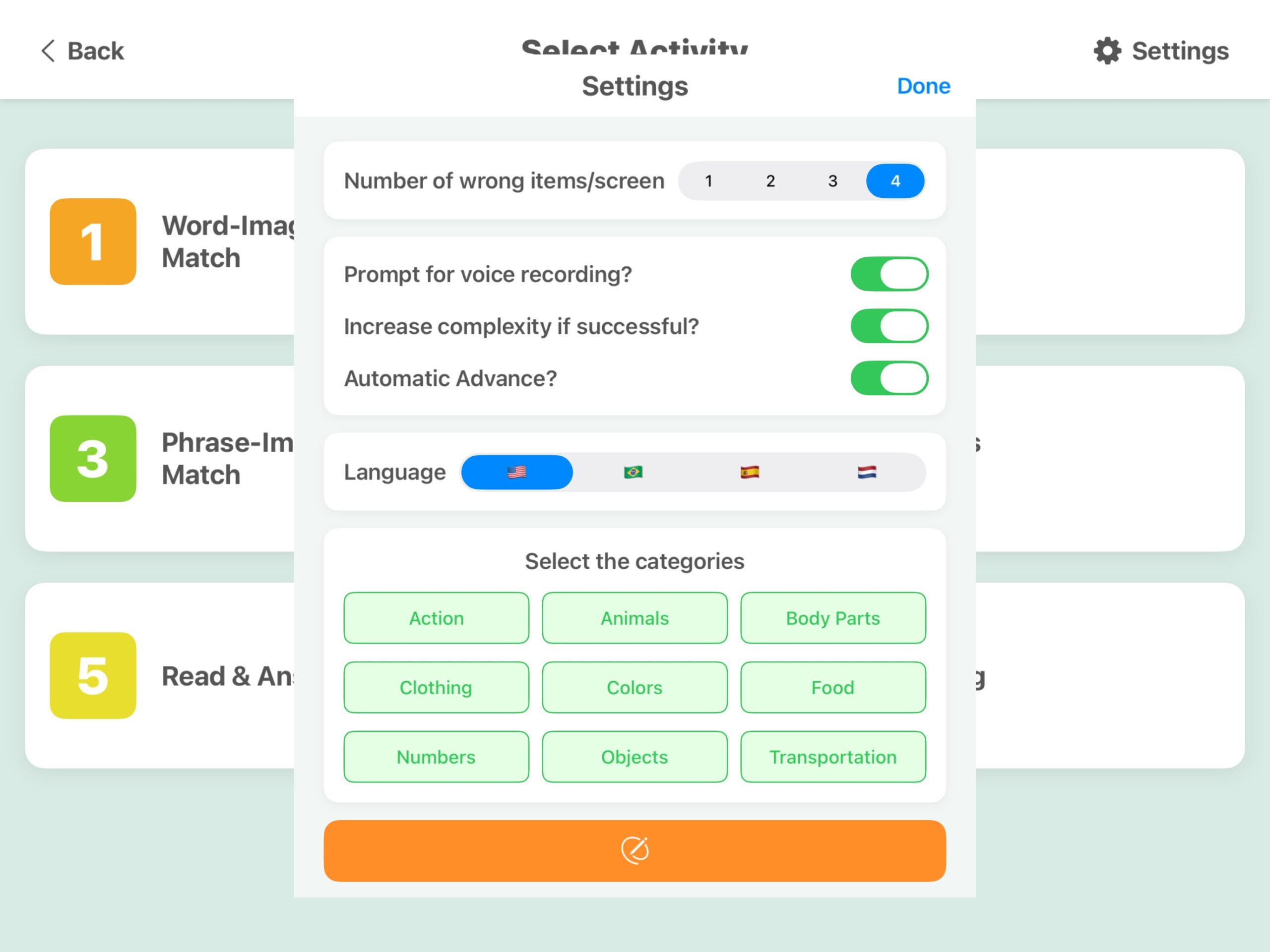
No two neurological recoveries are exactly the same. The comprehensive Settings menu gives speech-language pathologists and caregivers granular control over every aspect of the therapy session, ensuring the app adapts to the patient, not the other way around.
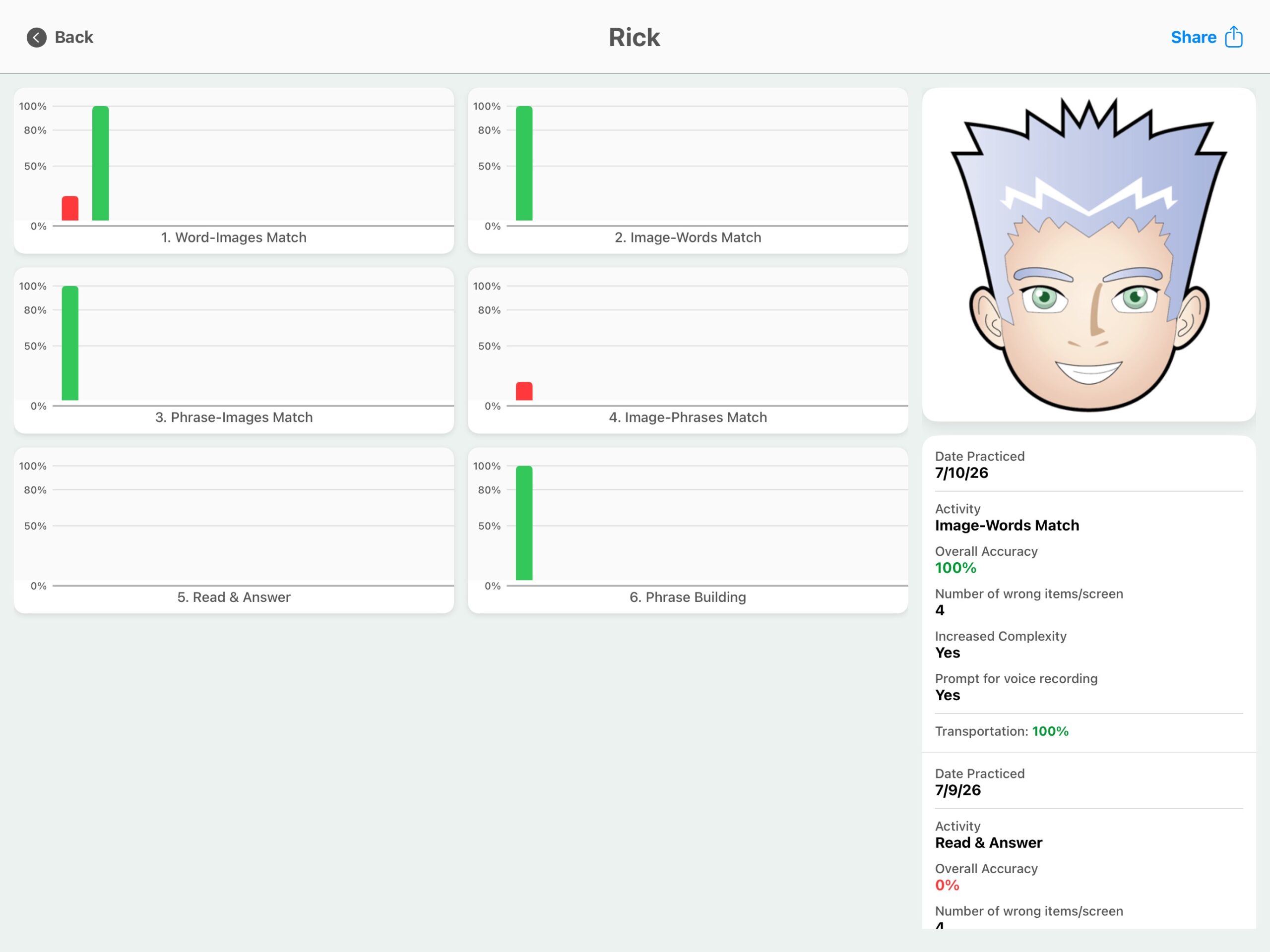
Say goodbye to manual tally counters and disorganized notes. The Reading Rehabilitation Toolkit automatically tracks every interaction, providing clinicians with instant, actionable insights to guide the patient's recovery plan.
Equip your clinic or your home with the premier evidence-based toolkit designed specifically for adults recovering from aphasia and alexia.