FeaturedSmarty Ears Online: 90+ activities in your browser, with progress reports for every student. Try it free for 14 days. Learn more →

So much of our social fabric is invisible to us. It is so woven into everyday life that it fades into the background, but that isn’t true for everyone.
Little social norms that seem like nothing to you and me can feel overwhelming to many students. For students with autism or other special needs, they can even cause a fair amount of anxiety. Social Quest has become a go-to app for older students working on social skills, because it gives them realistic practice in reflecting, predicting, social etiquette and problem solving. That way they feel better prepared, and less stressed, when they meet those situations in real life.
The app covers the situations students are most likely to face in the places where they spend the most time. This practical approach makes it easy to carry what they learn over to real life.
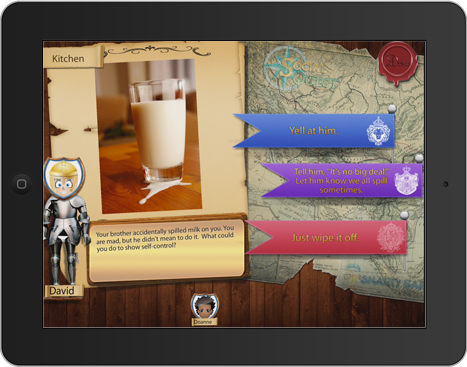
If you’re a parent, you know how much it matters for kids to get along with the people they live with, for the child and for the whole family. Family life is full of social situations, many of which will matter for the rest of their lives. Home includes the living room, kitchen, bedroom, bathroom and garage/yard.
Teachers and SLPs want things to go smoothly for their students, and it feels great to know a student can move between different areas of the school without you there to help. Parents, too, are relieved to know their child walks into these situations a little more prepared. School includes the classroom, auditorium/library, cafeteria, hallway/office and yard/gym.
Eventually you want the student to be successful not just at home and at school, but in the places they visit most. Community includes the grocery store, mall, restaurant, neighborhood, movies and the doctor’s or dentist’s office.
Life is rarely like a math equation with just one right answer. Often there are several good ways to handle a situation, and teaching that kind of flexible thinking helps students make better social decisions. Knowing there is more than one right way can also ease the stress of a situation, and it builds critical thinking skills that matter every day.
The receptive mode (multiple choice) has two correct answers for every question. In the settings, you decide whether the student must find both or whether one is enough. This makes a great scaffold, so the app meets the student at their current level. When a student is consistently finding both answers, move them up to the more challenging expressive mode.
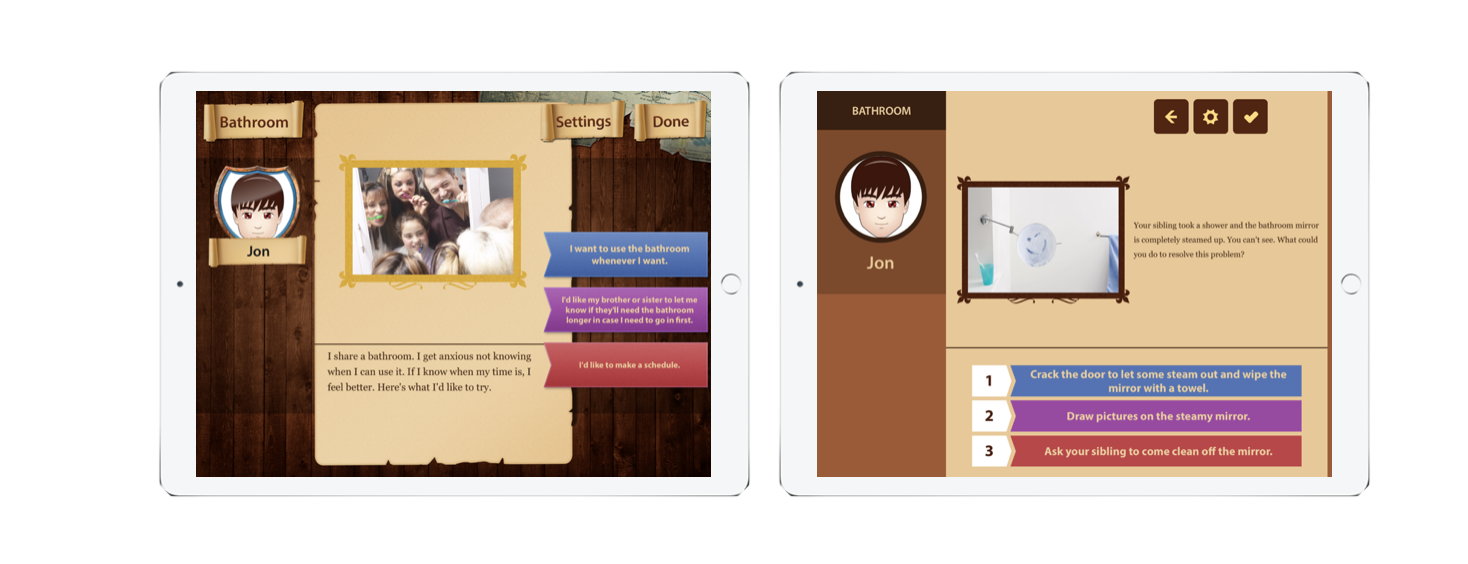
In the expressive mode (open-ended responses), students can get credit for several correct answers. You can mark incorrect answers too, but what matters is the big step forward when a student starts to picture, on their own, the different appropriate ways to handle a situation.
Social Quest has 850 questions, far more than apps with only 10, 20 or 50. Like all Smarty Ears apps, it was designed by a speech-language pathologist and a teacher who know what it is like to be in the classroom, so you can use it often without much repetition.
Being a “social detective” is fun. From the “teleporter” that takes students to their target areas to the “Hall of Rewards” that stores the trophies they earn in receptive mode, the app borrows some of what makes video games fun for teens, making social skills practice more engaging.
Learn more on the Social Quest page.


850 questions about real-world social situations, with receptive and expressive modes.

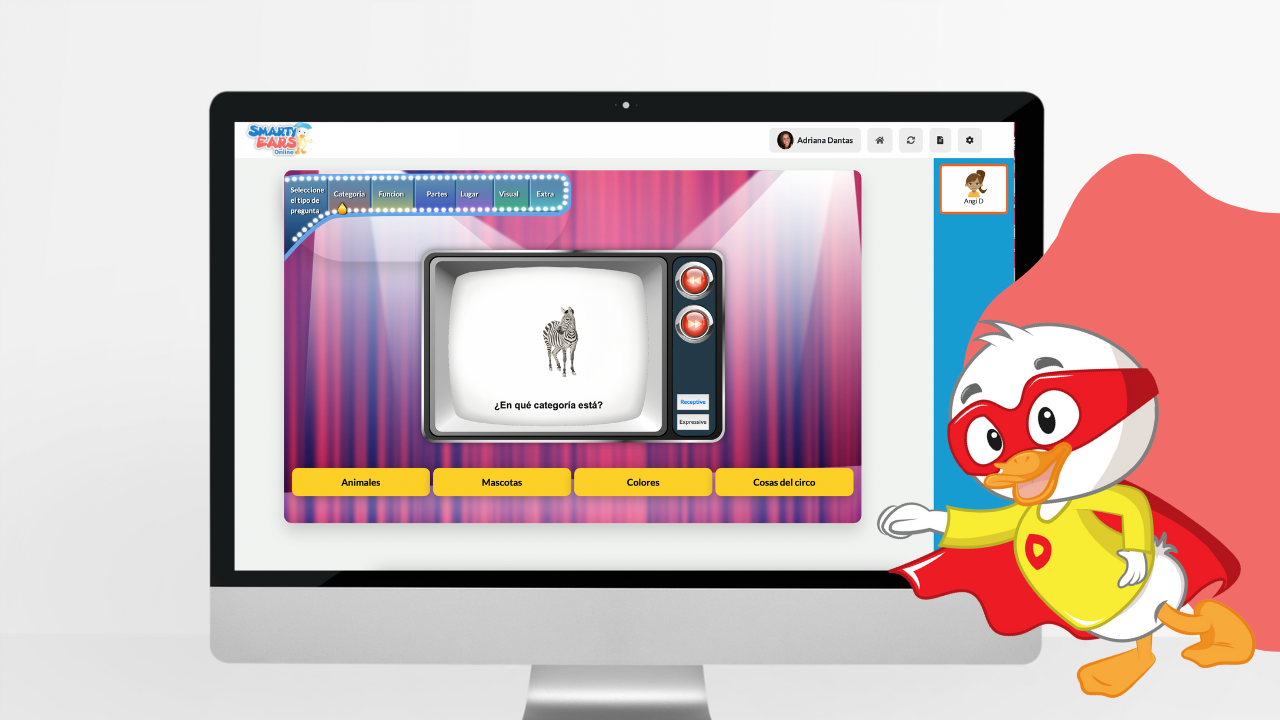
Social Quest is one of 90+ activities in Smarty Ears Online, on any computer, Chromebook or tablet, with every answer saved to the student’s progress page.
Basic Professional: 14 days free, then $29 a month. Cancel anytime.
 The Role of Technology in Enhancing Social Skills: A New Frontier in Education and Therapy
 Describe it to me Available on Smarty Ears Online
 Smarty Ears Announces WhQuestions, Its New iPhone App for Speech Therapists