FeaturedSmarty Ears Online: 100+ activities in your browser, with progress reports for every student. Try it free for 14 days. Learn more →

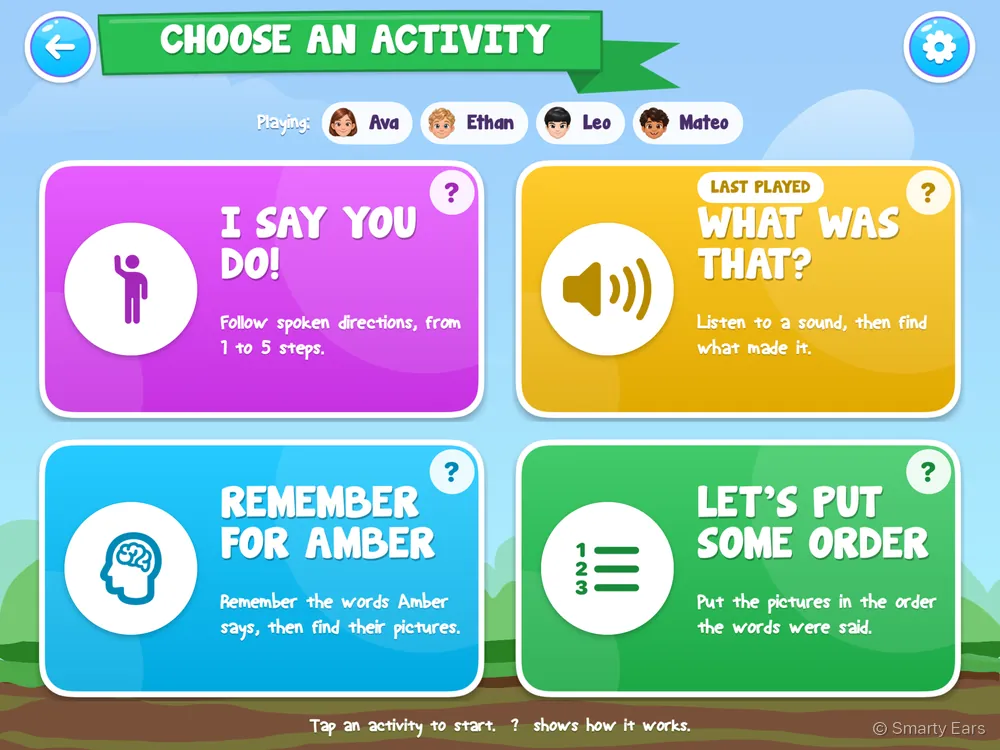
Four listening games, made by a speech-language pathologist, that build the skills behind following directions, learning in class and everyday conversation. A few minutes a day is plenty.
Many students hear every word but lose it a few seconds later. It shows up everywhere in the school day.
Many children hear every word but lose it a few seconds later. You see it every day.
They come back with the shoes. The second step of the direction is gone.
They were listening, but they can't tell you. The words didn't stay long enough to use.
One item makes it, the rest don't, or they come back in the wrong order.
Auditory memory is a skill, and skills can be practiced. Auditory Memory Club turns that practice into games your students ask to play, with data you can put in a report.Auditory Memory Club turns that practice into games your child asks to play, a few minutes a day.
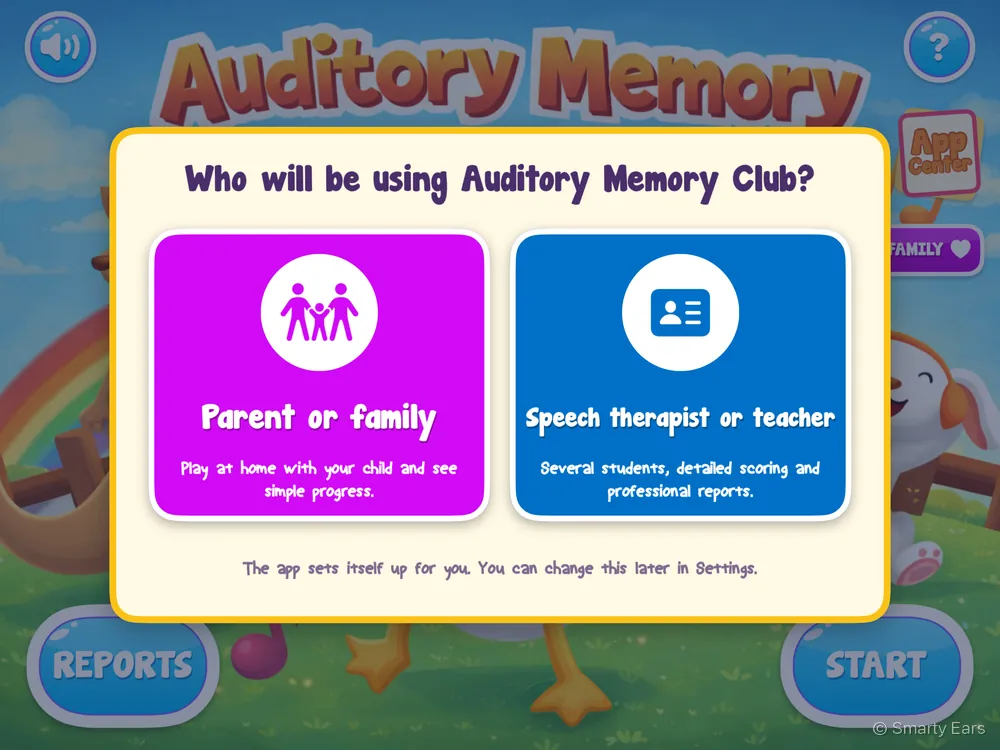
The app asks this the first time it opens and sets itself up for you. Pick one to see the page for you.
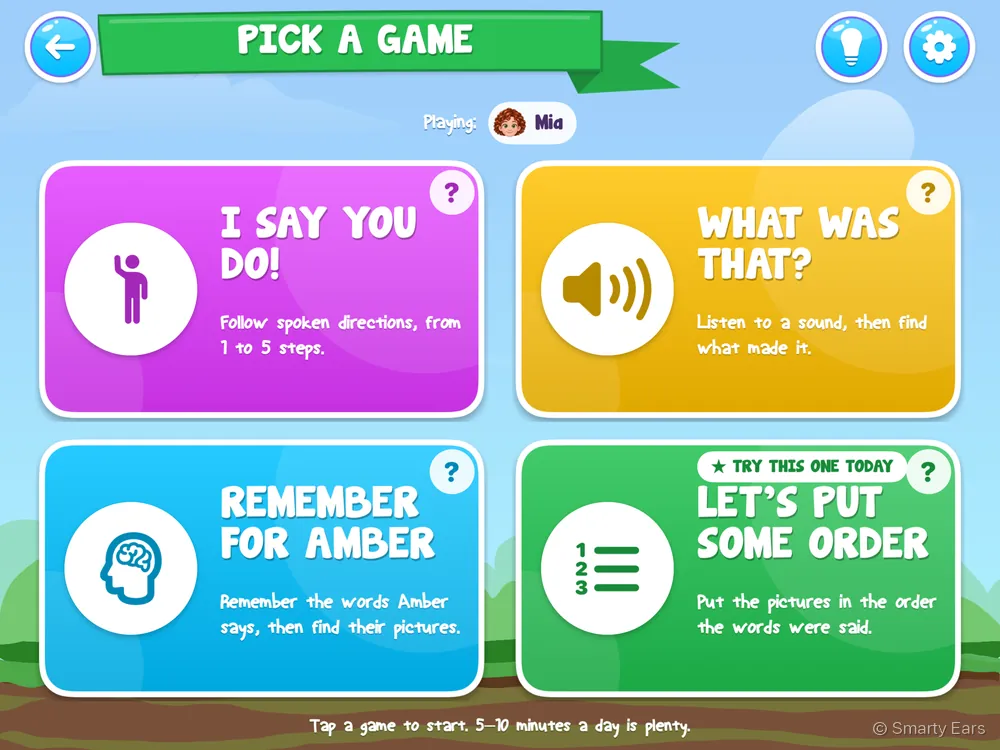
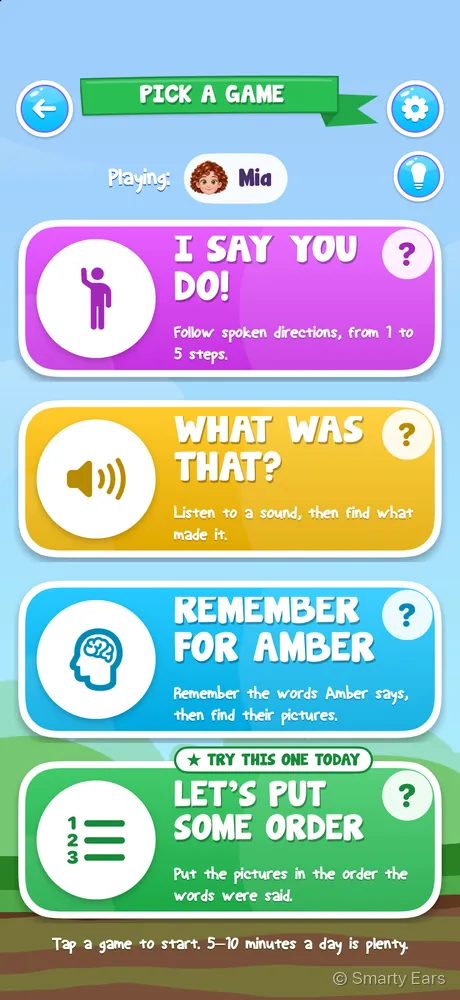
Each game practices a different part of listening memory, from following a one-step direction to remembering a list in the right order. Real sounds, words and pictures, from easy to harder.
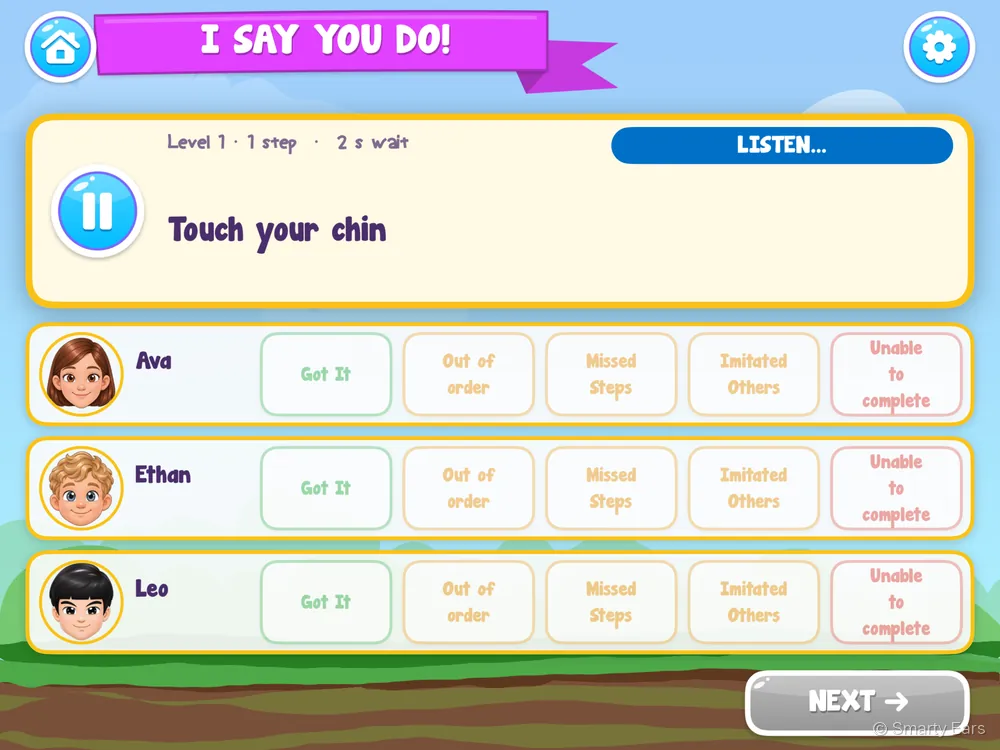
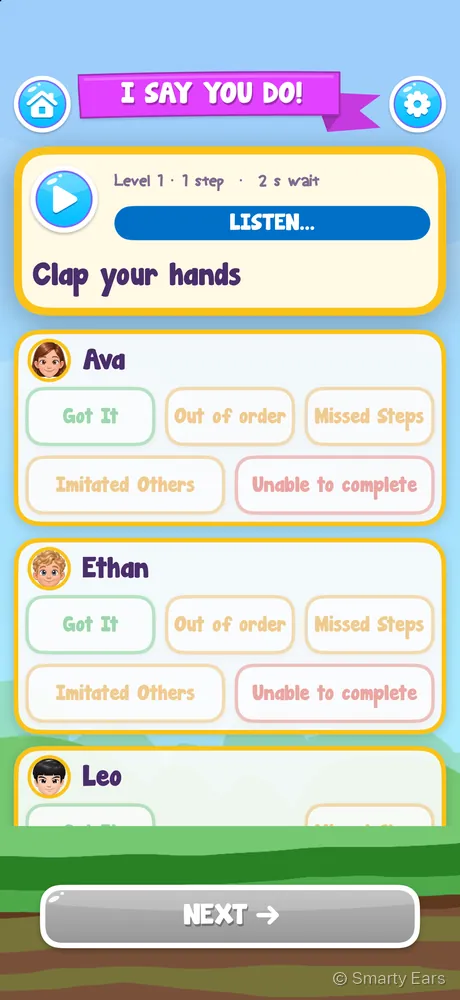
The app says a direction, from “Clap your hands” to five steps in a row, and children do it. You mark what you see: Got it, Out of order, Missed steps, Imitated others or Unable to complete.You tap how it went, and the app suggests the next level when your child is ready.
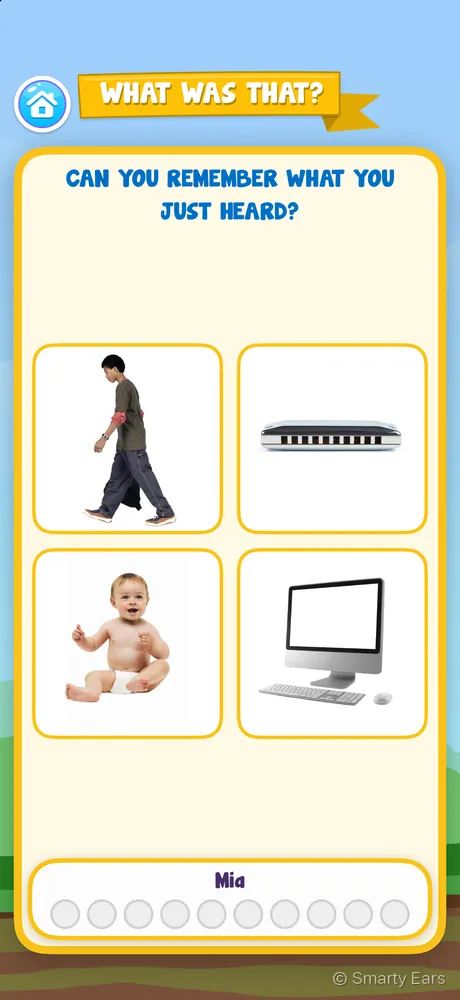
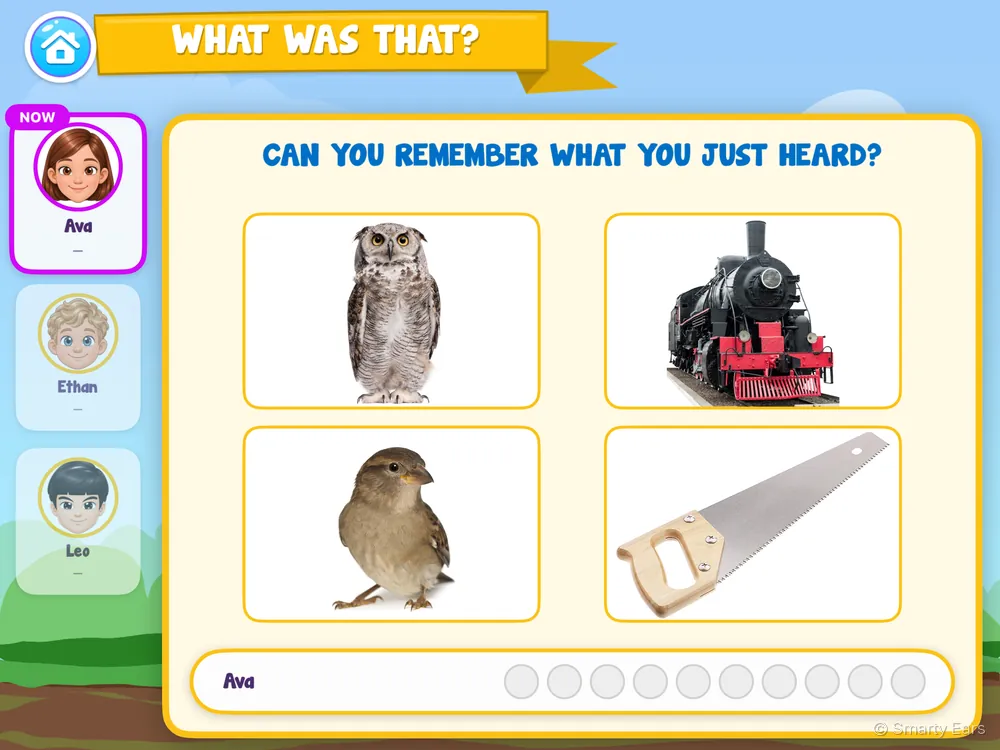
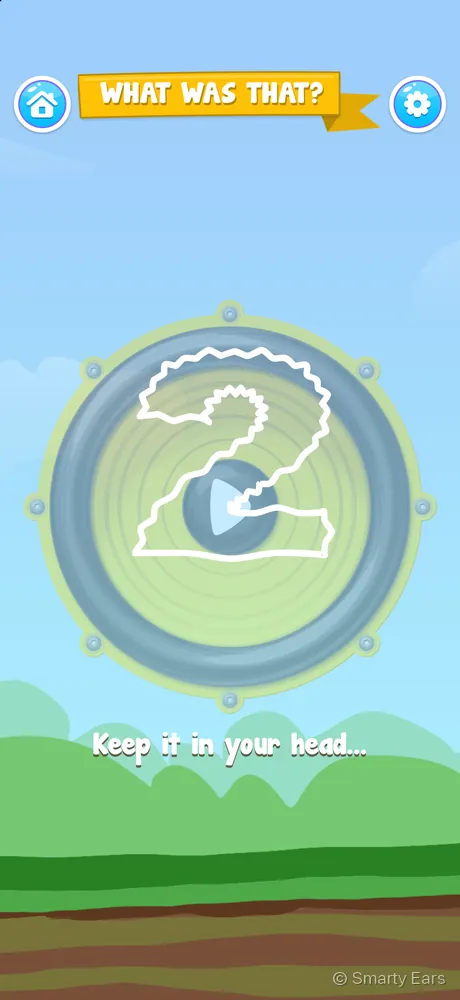
An everyday sound plays, a short wait counts down (“Keep it in your head…”), then children find what made it among 2 to 6 pictures. Background noise can be turned on to practice listening like in a busy room.
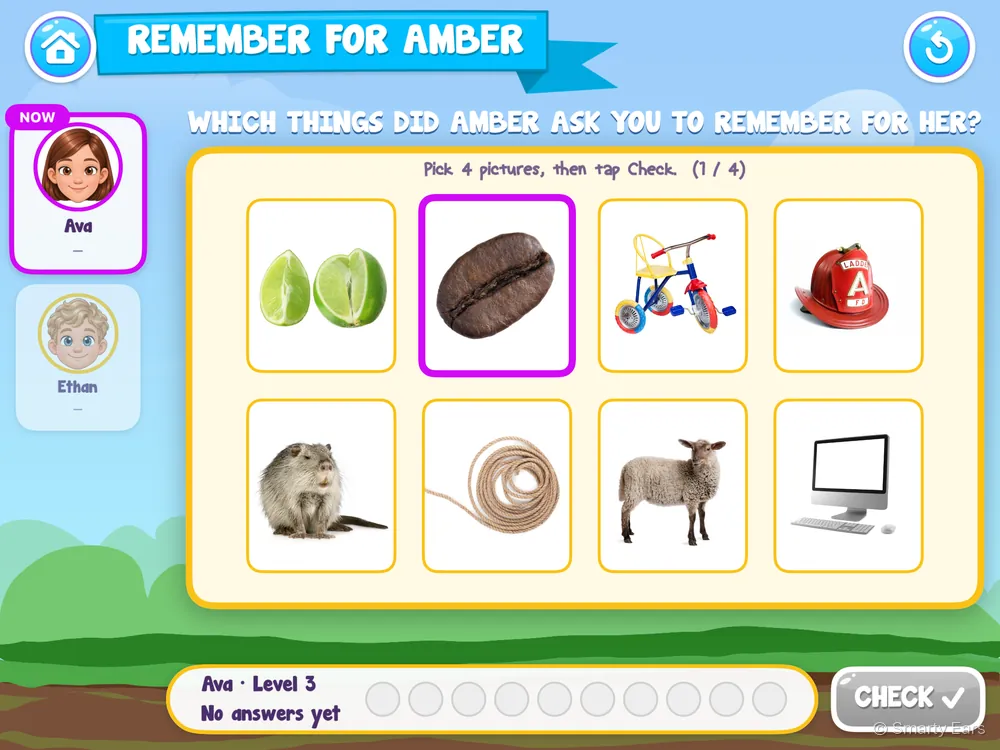
Amber says a list of words and children find every picture they heard. Start with a few words and add more as memory grows.
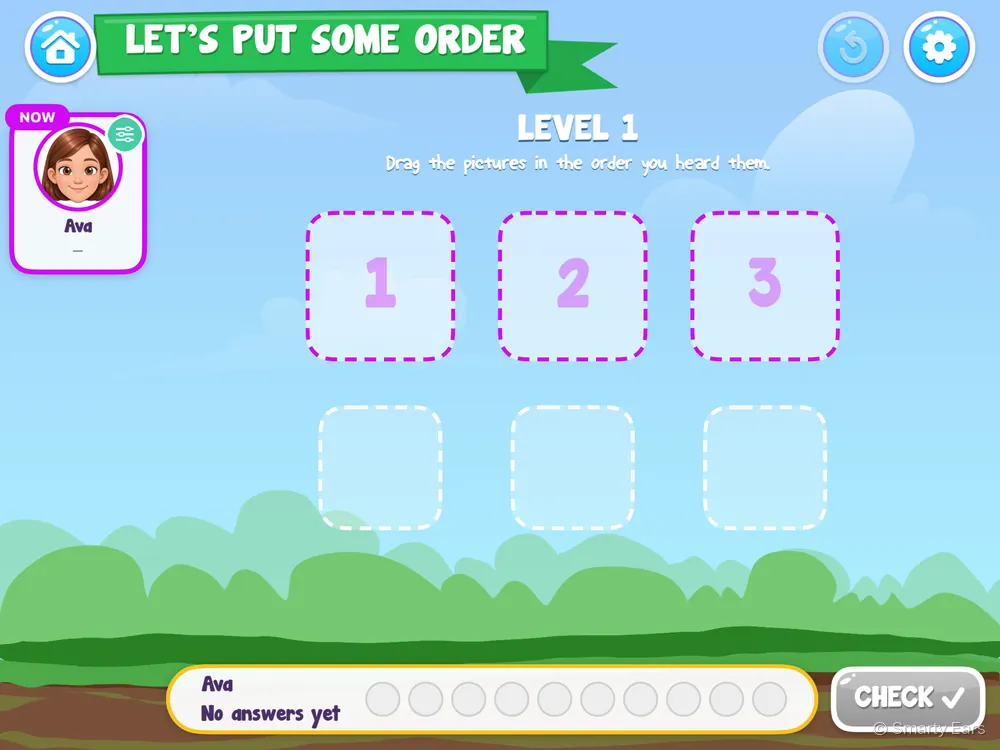
Children put the pictures in the order the words were said: not just what they heard, but when.

Auditory Memory Club for SLPs and teachers (1:26)

The long walkthrough (13:06), recorded with an earlier version, so your screens will look newer

Auditory Memory Club for families (1:09)
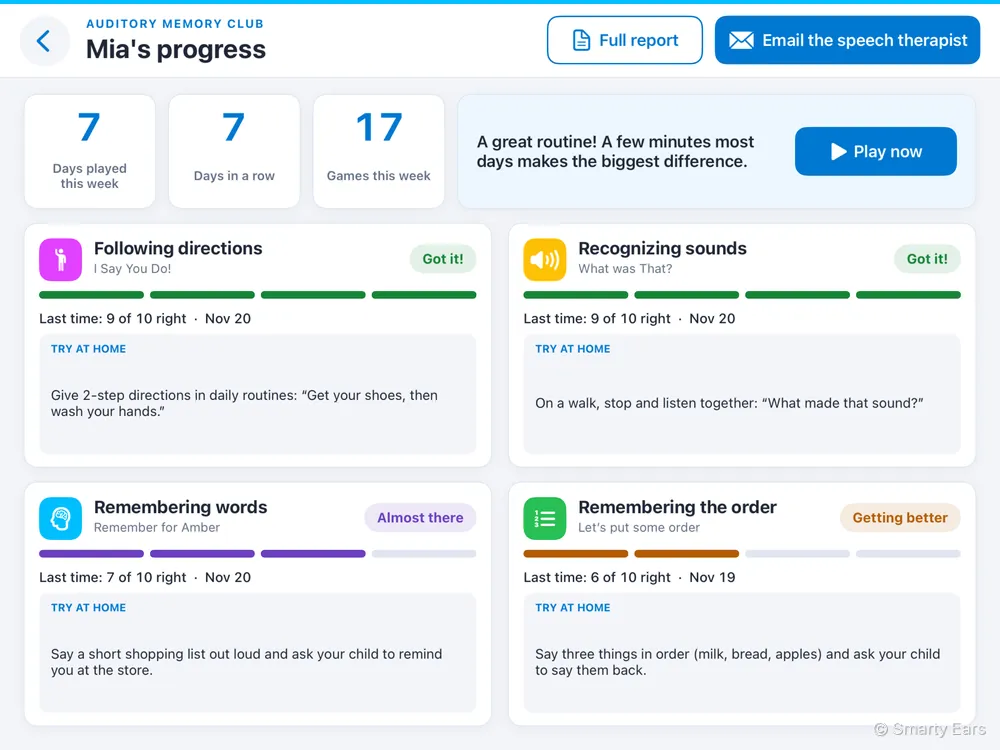
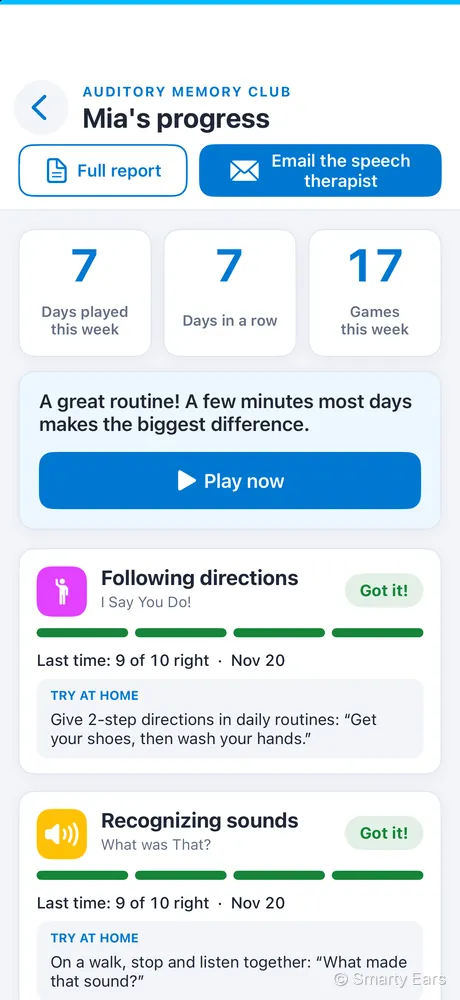
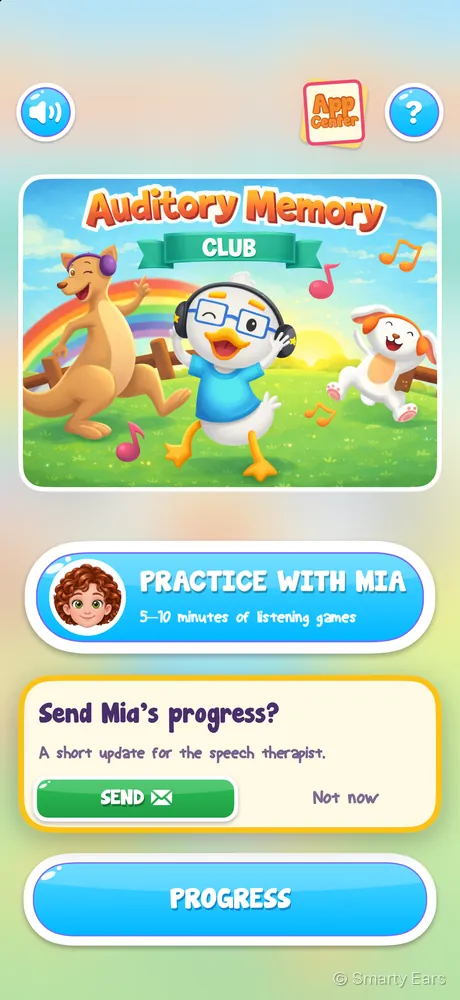
Every practice ends on your child's Progress page: days played this week, days in a row, and how each skill is going.
Each skill comes with a Try at home idea, like “Give 2-step directions in daily routines: ‘Get your shoes, then wash your hands.’”
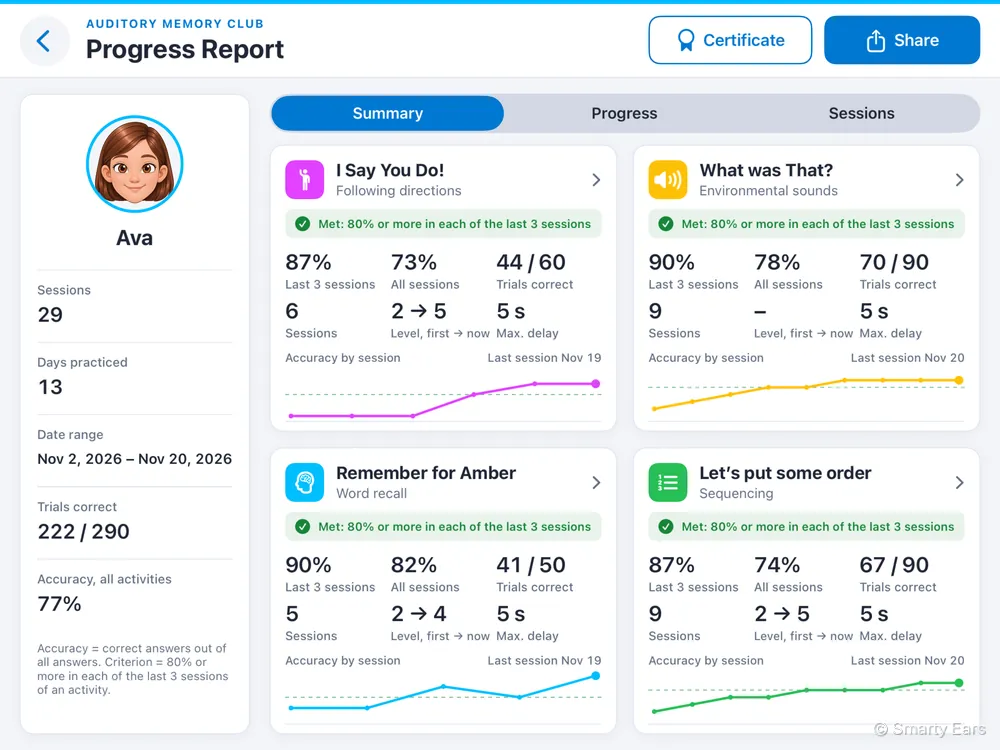
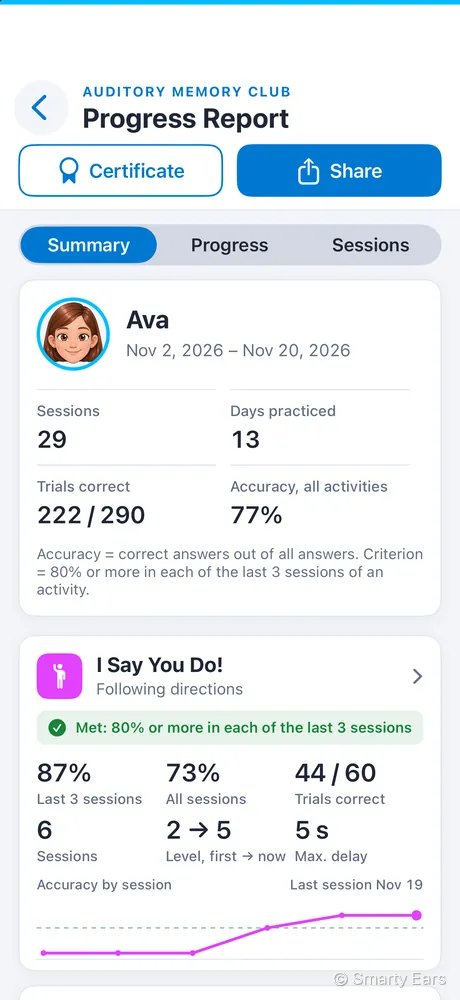
Every student gets a Progress Report: accuracy by session, level history and whether they met the 80% criterion in each of the last three sessions, for every game.
Choose “Parent or family”, type your child's name, and the home screen says Practice with your child. That's all the setup there is.
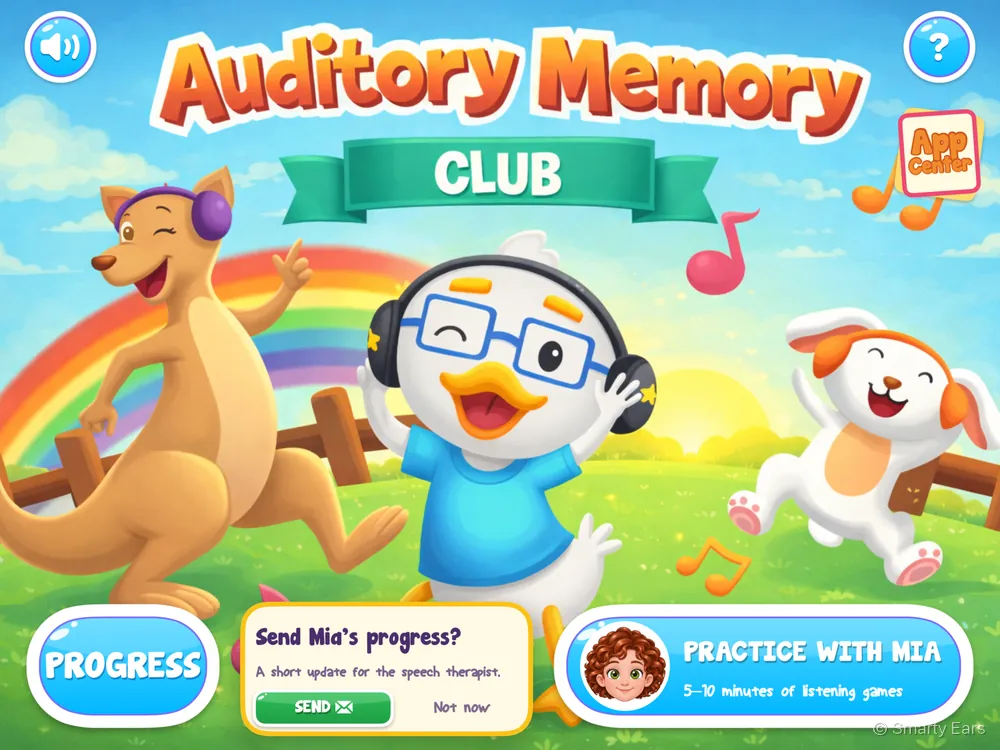
A “Try this one today” tag points to the game your child hasn't played for the longest, so every listening skill gets its turn and you never have to wonder where to start.
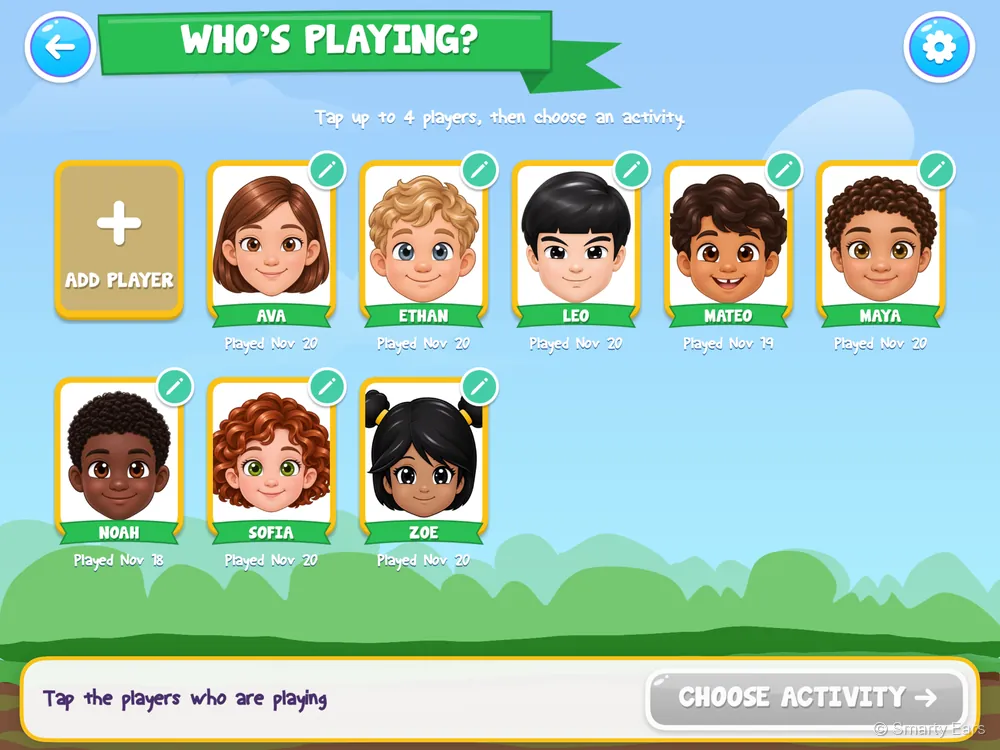
Tap the players and choose an activity. They take turns, and every student keeps their own level and data, so one app works for your whole caseload.
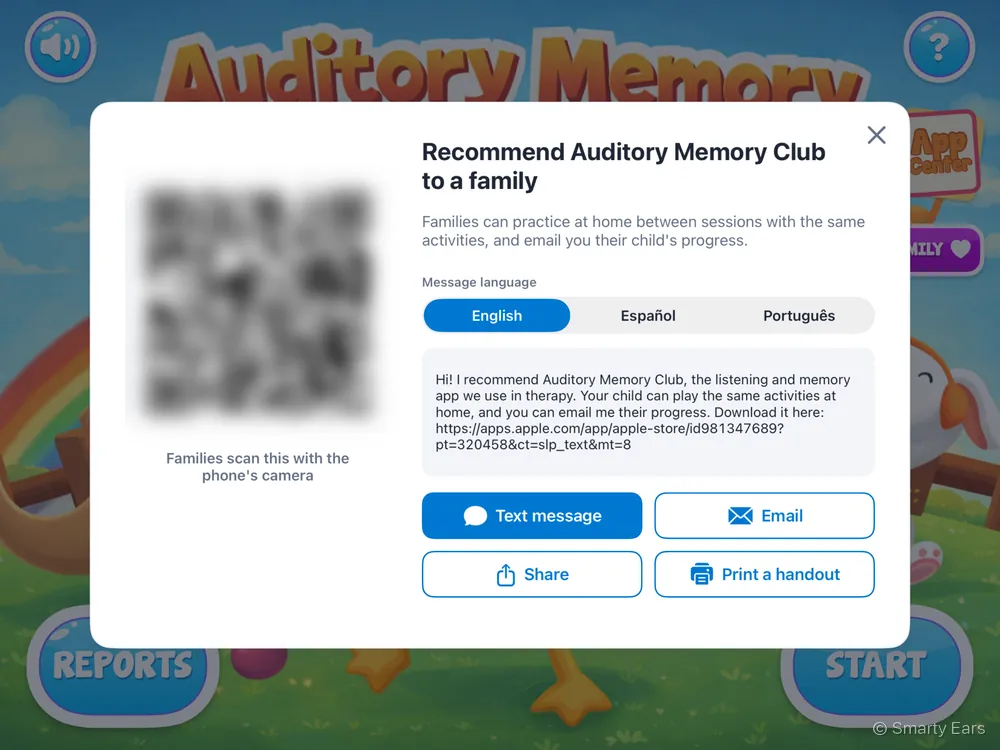
Share the app with a family by QR code, text message, email or a printed handout, in English, Spanish or Portuguese. Families practice the same games at home between sessions and can email you their child's progress.
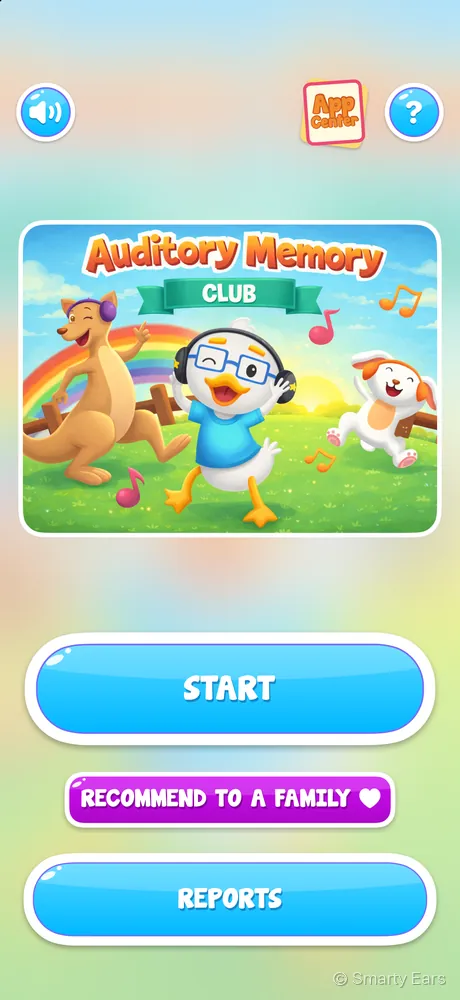
Friendly characters, big pictures and short turns keep children wanting one more round, which is exactly how listening memory grows.
Auditory Memory Club was created by Barbara Fernandes, M.S., CCC-SLP, founder of Smarty Ears, whose apps are used by speech therapists, teachers and families.
One purchase, no in-app purchases, nothing pulling your child away from the game.
Players and results stay on the device. Back them up to a file and restore them on a new one.
Help, sharing and recommending sit behind a simple math question.
Every screen is designed for each device: practice on the iPad in therapy and on a phone at home. On the folding iPhone Duo, the app re-arranges itself when you open or close it.
The whole app runs in all three languages, so families can practice in the language they speak at home.
It's the ability to hold on to what you hear long enough to use it: following a direction, remembering a list, or retelling what someone said in the right order. Auditory Memory Club practices it through four games.
Children who find it hard to remember spoken information or follow directions, and the speech therapists, teachers and parents who help them. English learners use it to build listening skills too; the app runs fully in English, Spanish and Portuguese.
5 to 10 minutes of listening games a day is plenty. Short, regular practice works better than long sessions.
No. It's a one-time purchase of $29.99 on the App Store, with no in-app purchases and no ads.
iPad and iPhone, including iPhone Duo, with every screen designed for each device.
Yes. Add a player for each child; up to 4 can take turns in one session, each with their own level and data.
No account is needed. Players and results stay on your device, and you can back them up to a file and restore them on a new device.
Yes. Families can save the therapist's email and send a short progress update; therapists get full Progress Reports they can share as a PDF.
Four listening games, scoring that shows how a direction went, and reports you can share. $29.99, one time, for iPad and iPhone.
Help your child remember what they hear, a few minutes a day. Set up in a minute. $29.99, one time, for iPad and iPhone. No subscription.
Download on theApp StoreAuditory Memory Club is an iPad app you buy once. Its sound recognition and ordering activities are also in Smarty Ears Online as What was that? and Let’s Order It, in English, Spanish and Portuguese, alongside 78 more activities.
| Compare | The iPad app | Smarty Ears Online |
|---|---|---|
| Works on | iPad | Any computer, Chromebook or tablet, in the browser |
| How you pay | Once, on the App Store | Monthly or yearly, with 14 days free |
| Your data | Kept in the app | Every answer saved to each student’s progress page, with reports |
| What you get | All four Auditory Memory Club activities | What was that?, Let’s Order It and the rest of the 100+ activities |
Smarty Ears Online is a separate subscription for SLPs and educators: Basic Professional is $29 a month after the free trial, and you can cancel anytime. The Auditory Memory Club app stays a one-time purchase.