1. Read picture books with no words
Reading to a child develops language skills in a way few other activities can. It also creates a special bond between the storyteller and the child, and it exercises both expressive and receptive language.
Take a book that has no words and ask the child to make up a story from what they see, or model language by telling your own story.
Begin by telling a little about what is on the page, then ask the child to continue the story. Our free feelings resource can give you ideas to talk about. Be sure to give them support if they get stuck.
2. Fill in the details with flashcards
Show the child picture flashcards you think they would be interested in. Talk about the pictures, and if they give you vague answers like “It’s a dog,” fill in the details for them: “It’s a big dog.”
Don’t have any flashcards handy? The app Describe It to Me turns practicing this skill into a fun game show.
3. Play robot
Children love to know things, so let them be the teacher for a while. Pretend you are their robot and can only do what you are told. The goal of the game is to get the child to explain to you how to do things.
4. Sequence what they did
Take 3 to 5 pictures of the child doing an activity, like putting on their shoes or washing their hands. Print the pictures and ask the child to put them in the order they happened. This is easier than sequencing random events, because they experienced the activity and can rely on memory.
Not big on scissors and glue? The iPad app GoSequencing has 50 built-in real-life sequences, and you can make your own with your own photos.
5. Make friends with puppets
Children with expressive or receptive language delays often engage with puppets when they are reluctant to communicate with people. Many become eager to talk to puppets and are much more likely to express themselves and listen as the puppets talk with them.
6. Other resources
One fun yet functional resource for expressive and receptive language is the app Fun & Functional. The child guesses the purpose of an object, then learns its name and says what they know about it.
Remember
Have fun with it, adjust to your child’s level, and don’t overcorrect: you want to encourage the process, not just the result.
Who knows? You might find that once children begin talking, they never seem to stop.



 The iPad Is Now Also Helping Stroke Survivors
 The Role of Technology in Enhancing Social Skills: A New Frontier in Education and Therapy
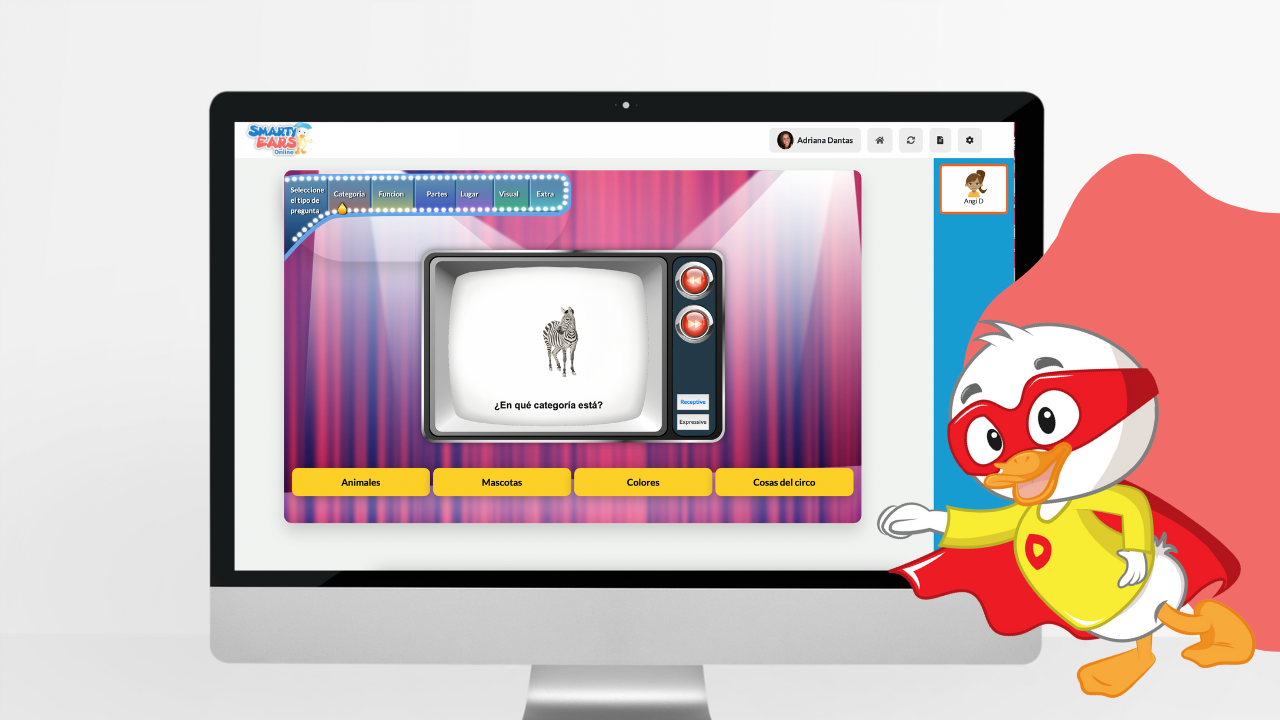 Describe it to me Available on Smarty Ears Online