FeaturedSmarty Ears Online: 90+ activities in your browser, with progress reports for every student. Try it free for 14 days. Learn more →
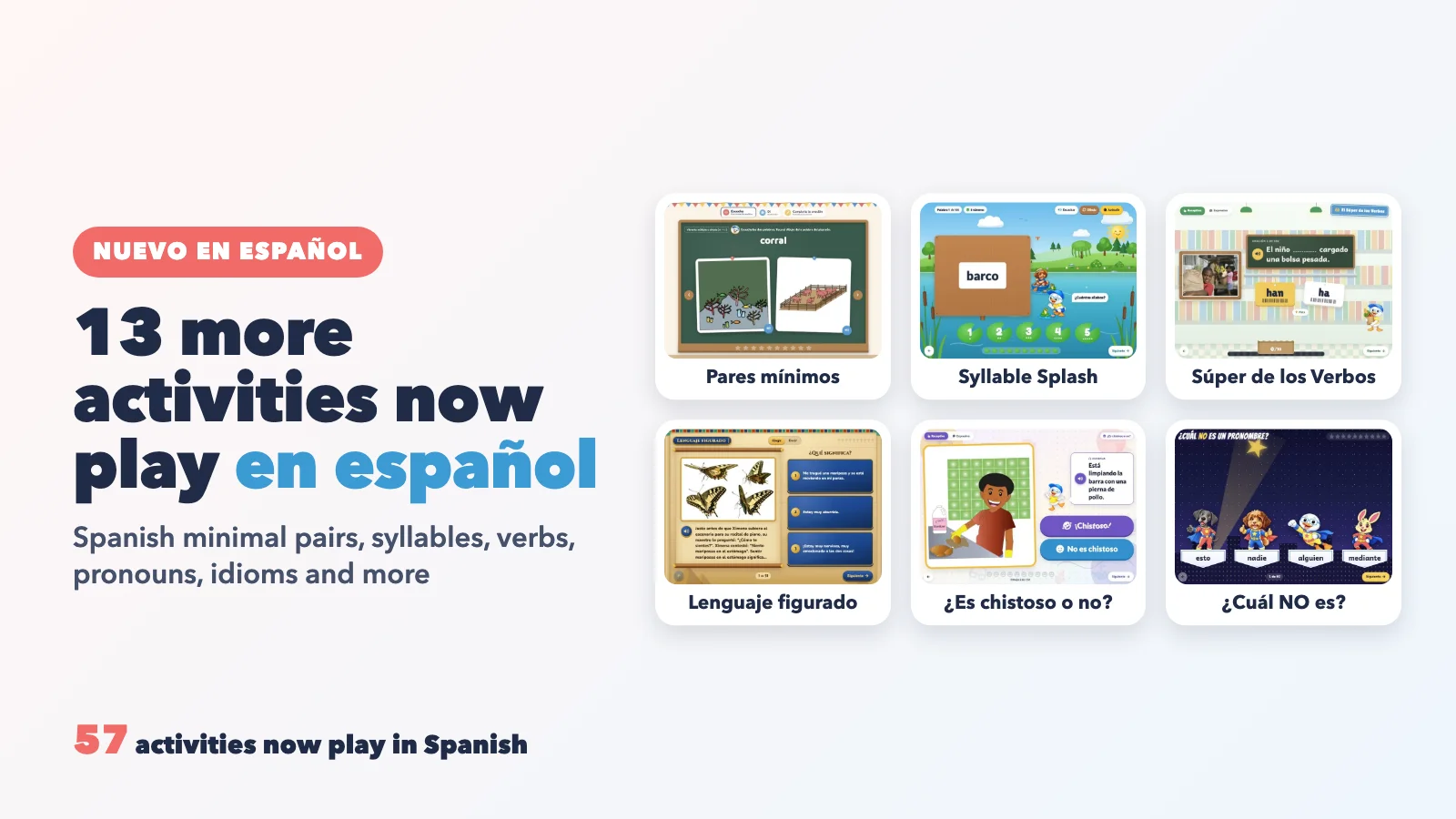
Two days ago, six more Smarty Ears Online activities started playing in Spanish. Thirteen more have joined them since. That brings even more Smarty Ears Online activities to Spanish, and many of the new ones play in Portuguese, French, Italian, Hindi, Vietnamese or Arabic too.
Most of them weren’t simply translated. Spanish has its own phonological processes, its own syllable rules and its own grammar, so several of these activities were written for Spanish from scratch: Spanish minimal pairs grouped by Spanish processes, syllable counts that follow Spanish rules, and verbs and pronouns the way Spanish uses them.
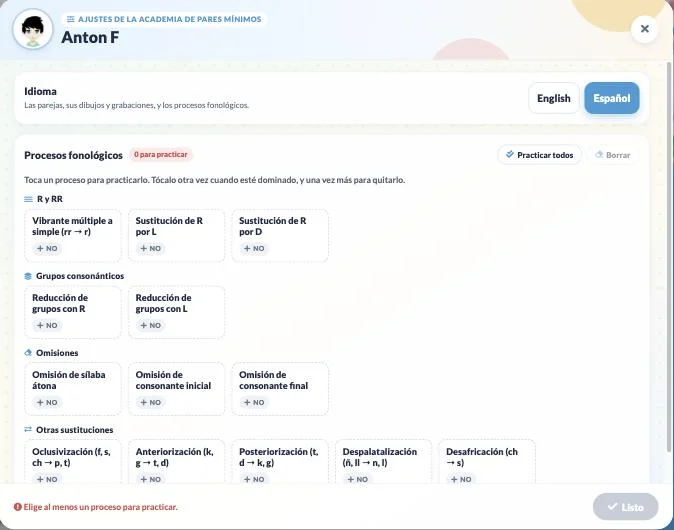
Set a student’s “Language you’ll work in” to Spanish once, and every activity that has Spanish opens in Spanish for that student, with the Spanish words, sentences and directions on screen. Students working in English keep getting the English version. Many activities also have a language switch in their own settings, so you can change it for one session. You score and track everything the same way in both languages.
The Spanish version isn’t the English one translated. Spanish children use different phonological processes, so the Spanish pairs are grouped by those: trill to tap (carro / caro), r to l (rata / lata), r to d (loro / lodo), cluster reduction (plato / pato), weak syllable deletion (zapato / pato), initial and final consonant deletion, stopping (fuente / puente), velar fronting and backing (boca / bota), palatal fronting (pollo / polo) and deaffrication (ocho / oso). English-only processes like gliding and TH aren’t there.
That’s 84 pairs in 13 processes. Both words are real and easy to picture, each has its own Smarty Symbols drawing and recording, and each completes a Spanish sentence. Switch the settings to Español, pick the processes your student needs, then listen, say, and finish the sentence.

The student hears a Spanish word, claps its syllables and hops to the lily pad with that number. There are 352 Spanish words, from the Spanish articulation word list, each with its photo and recording. The counts follow Spanish syllable rules, not the English list: rue-da and cie-lo have two beats, but rí-o and po-li-cí-a split where the accent falls, and the u in gui-ta-rra is silent.

In Spanish, Beginning Sounds asks for the first syllable, not the first sound: “¿Con qué sílaba empieza la palabra luna?” Spanish phonological awareness and early reading are built on syllables, and a syllable can be heard clearly where an isolated /b/ or /t/ can’t. There are 112 words for Pre-K to 3rd grade that start with an open syllable (ca-sa, me-sa, pi-ña, que-so, lla-ve), each with a Smarty Symbols drawing and a recording, and the syllable choices get closer as you add more of them.

Spanish has no do or does, but the idea behind the game carries over: the verb that goes with one person or with more than one. So the Spanish game has 192 sentences written for Spanish, in four groups: tiene / tienen, ha / han, está / están and es / son. The student scans the price tag with the right verb, and every right answer puts something in the shopping bag. The sentences use Mexican Spanish words like súper, carrito and alberca.

Spanish pronouns don’t line up one to one with English ones, so neither game was translated word for word. Using Pronouns has 336 Spanish sentences in 14 pronoun groups, from él and ella to mío, este and ese, each with a photo and a recording that pauses where the pronoun goes.
Which Is Not a Pronoun? has 92 Spanish sets. Each one shows four superheroes holding a word, and the impostor is a helping verb (es, tiene, podría) or a small word like sobre or hacia. The pronouns are only words that are always pronouns: accented él, tú and mí, never el, tu or mi, in Latin American Spanish (ustedes).

Figurative Language has its 51 expressions in Spanish, and each one uses the Spanish idiom with the same meaning rather than a word-for-word translation: “raining cats and dogs” is llover a cántaros. Inferencing has its 50 stories in Spanish, each with three answers to choose from and a recording, and the people in them have Spanish names like Valentina. Both also play in Portuguese, French and Italian.

All 116 pictures now come with a sentence in Mexican Spanish, each with its own recording. Each sentence was written from what its picture shows, so it stays silly in the same way: “El niño se está comiendo un hot dog” is fine, “El niño se está comiendo un perro” is silly. The words are the ones children in Mexico use, like alberca, regadera and banqueta.

All 270 directions in the 27 levels are in Mexican Spanish and recorded, with every word on screen in Spanish. The words follow the pictures and Spanish word order: “Toca la mesa café pequeña.”, “Antes de tocar el pato, toca la manzana.” Following Directions also plays in Portuguese, Vietnamese and Arabic.

Go Together asks “¿Qué va con un perro?” across its 197 items, each with its own recording, and also plays in Portuguese, French, Italian and Arabic. Sequencing has all 153 tasks of 3, 4 and 5 steps in Spanish, with Spanish names like Sofía and Valeria and the local money and holidays. GoSequencing loads its 43 picture stories onto the train in Spanish, using the translations and recordings from the GoSequencing iPad app. Both sequencing games also play in Portuguese, French and Hindi.

All 13 are included in every plan, along with the rest of the Spanish library: the speech sound activities with 353 Spanish target words, the Spanish speech sound profile, WH Questions, Speech Go Fish and more. See all 57 on our page for bilingual SLPs.
Basic Professional is free for 14 days, then $29 a month. Start your free trial, set one student to Spanish, and open Minimal Pairs Academy. It’s the quickest way to see the difference.
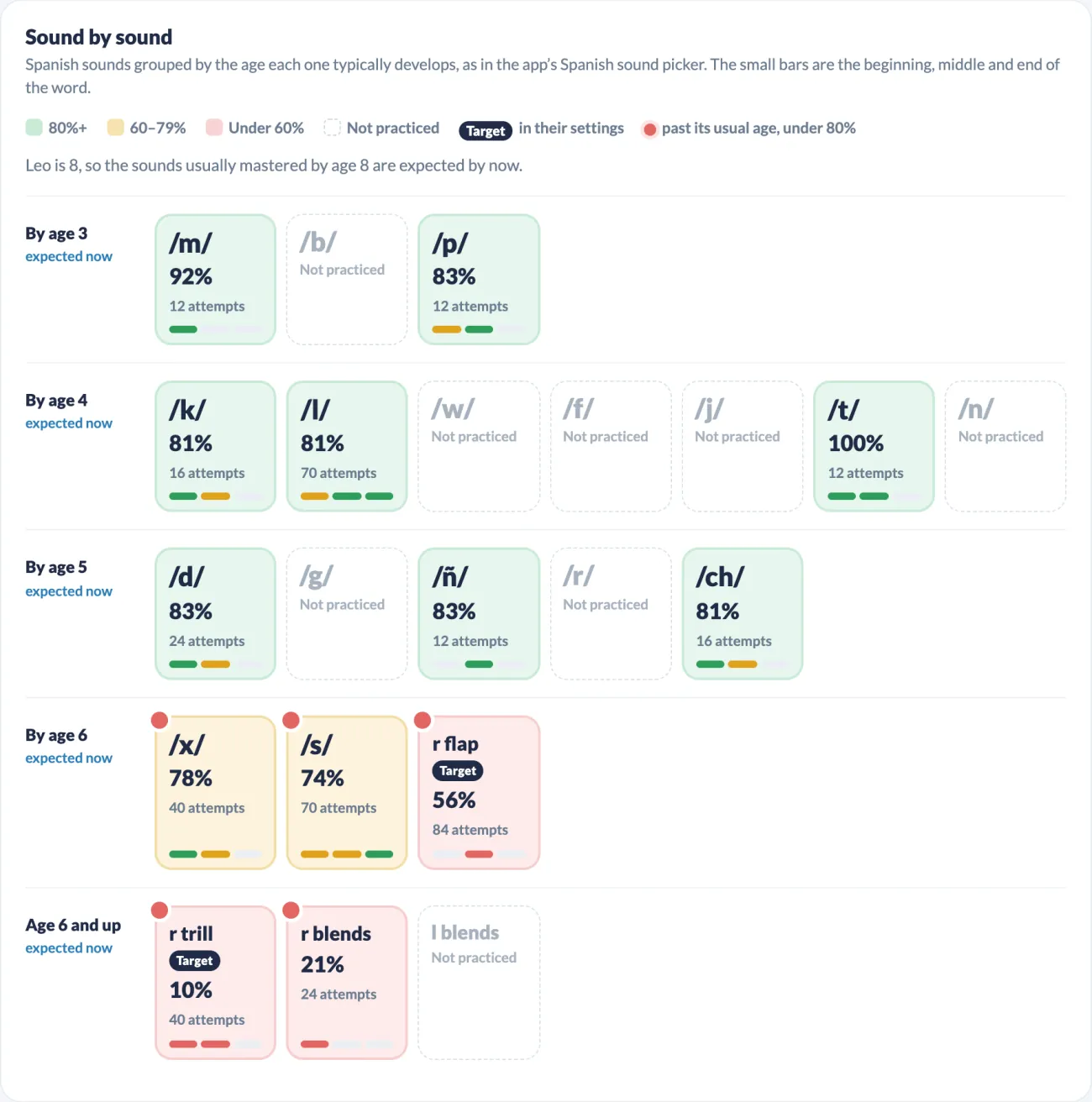
Many activities play in Spanish and Portuguese, and the speech sound profile has a Spanish view with the Spanish sounds by age.
Basic Professional: 14 days free, then $29 a month. Cancel anytime.
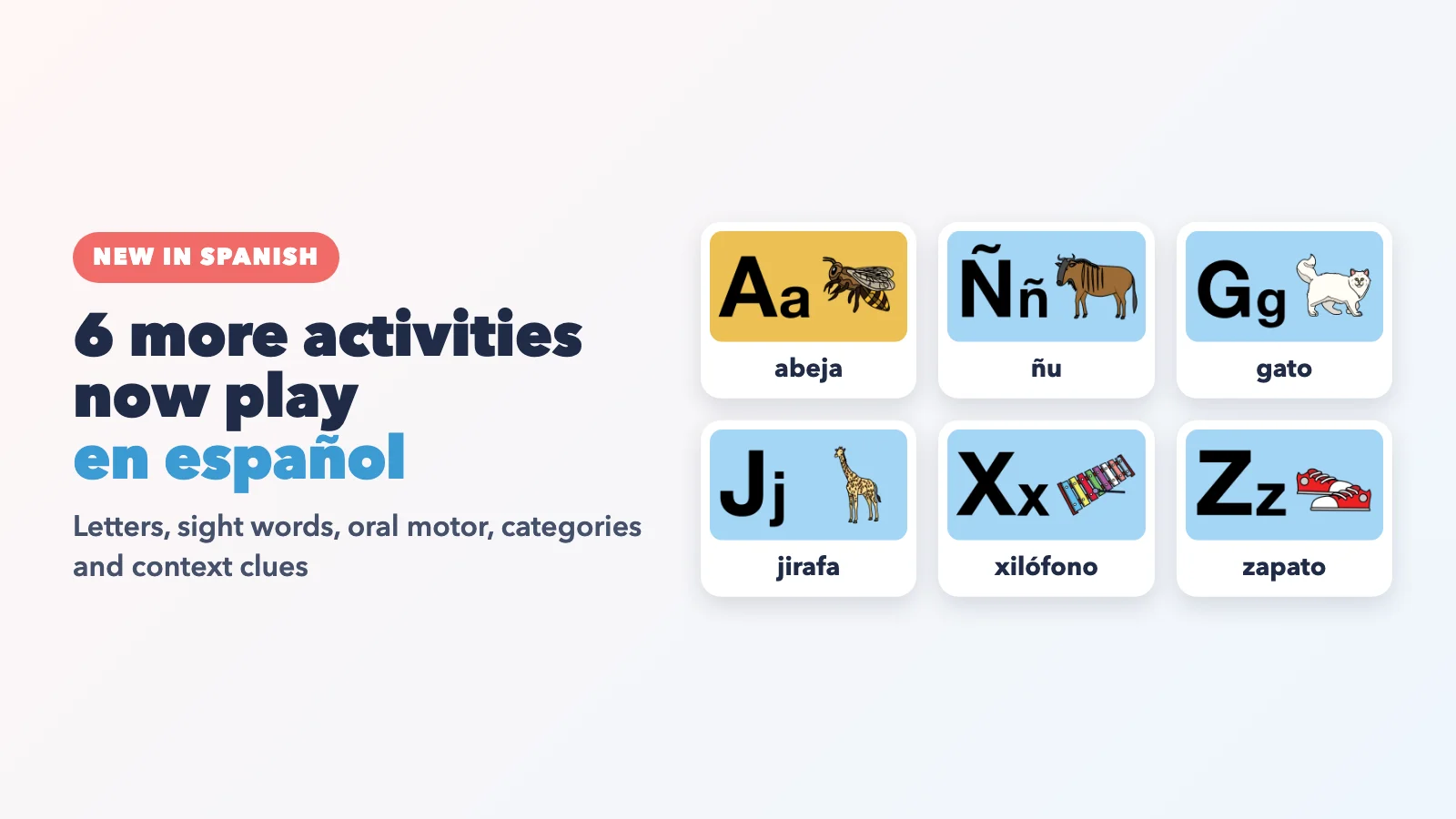 6 More Smarty Ears Online Activities Now Play in Spanish
 Supporting Emerging Bilingual Students with Speech Therapy Technologies
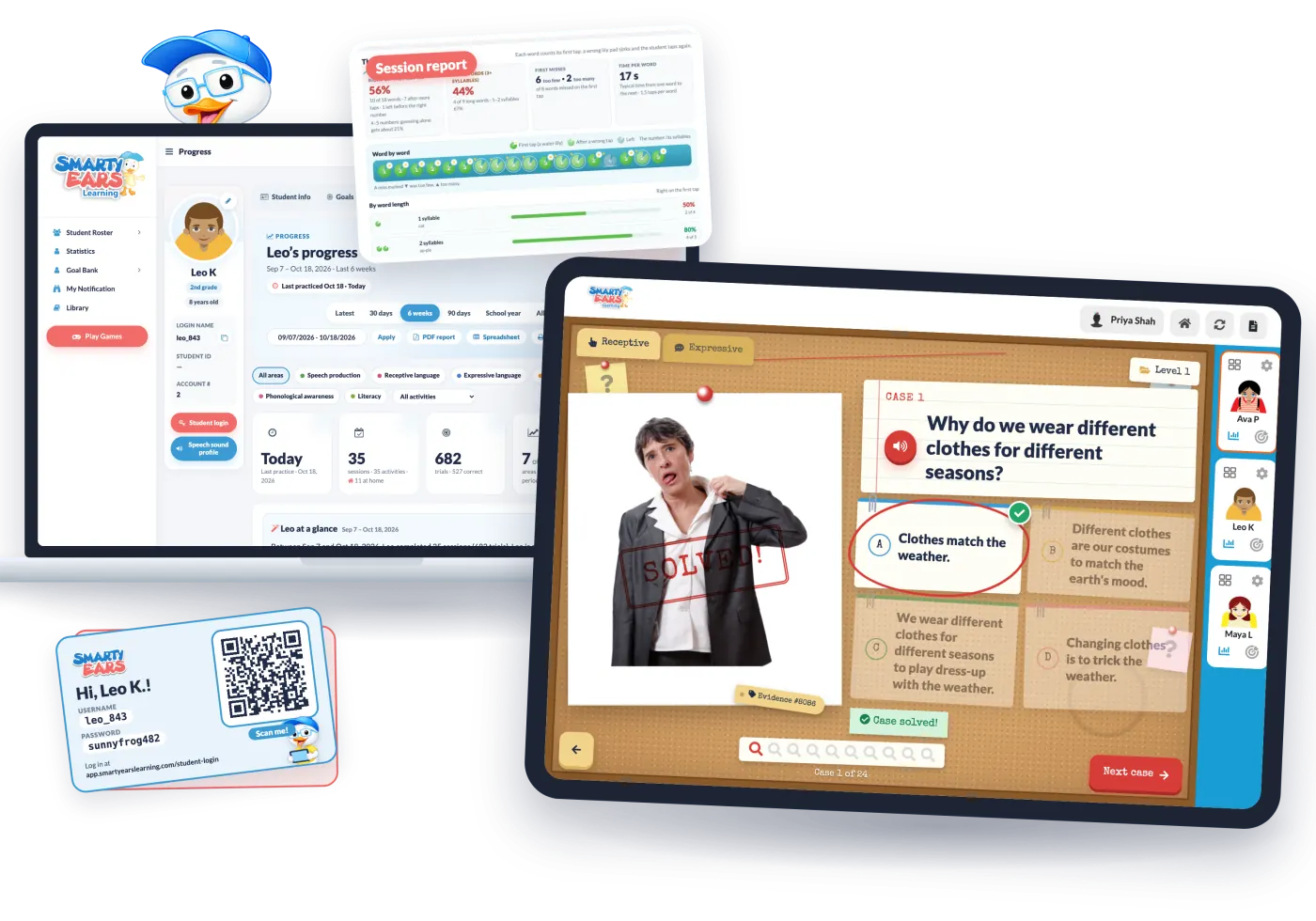 Smarty Ears Online, Rebuilt: What’s New in 2026